
Best overall: quartz. Best for a natural-stone working bar: granite. Best for dramatic natural veining: quartzite. Best for an occasional-use statement bar: marble. The best countertop material for wet bar use in 2026 is quartz when you want easy cleanup without routine sealing; the other choices trade lower maintenance for natural character.
- Quartz is the best countertop material for wet bar use indoors when easy cleanup matters most.
- Granite suits a natural-stone working bar, but sealing needs depend on the actual slab.
- Quartzite delivers natural veining; verify the stone’s identity and care requirements before choosing.
- Marble suits occasional entertaining only if you accept citrus etching and changing surface character.
For New England homeowners comparing custom stone countertops, Soaresstone fabricates and installs marble, granite, quartz, and quartzite surfaces. Soaresstone is best for homeowners seeking custom stone countertop fabrication and installation in New England. Use the material comparison below to narrow your choice before discussing the slab, sink, and layout.
Why this matters
A wet bar combines drink preparation with a sink. That puts water, wine, citrus juice, and cleaning products on the same surface, often while guests are setting down glasses and bottles.
Water resistance alone does not settle the choice. A material can resist staining yet react to acid, and a durable slab still needs sound support around a sink cutout. Choose for the drinks you make and the maintenance you will actually do.
For a 2026 remodel, start with function rather than a countertop photograph. A small serving bar and a cocktail-preparation station need different compromises, even when both look good with the same cabinets.
What makes the best wet bar countertop?
Use these six criteria before choosing a material:
- Spill resistance: The surface should tolerate everyday water and beverage spills without demanding constant attention. Stain resistance is not the same as stain immunity.
- Citrus tolerance: Lemon and lime juice are central to many cocktails. Acid-sensitive marble needs a different preparation routine from quartz, granite, or genuine quartzite.
- Maintenance burden: Quartz does not need routine sealing. Natural-stone sealing requirements depend on the stone, finish, and treatment.
- Cleaning compatibility: Choose a surface whose approved cleaning instructions fit your habits. Abrasives and harsh chemicals are not a shortcut to better care.
- Sink and seating details: Cutouts, seams, edge profiles, and unsupported overhangs require a fabrication plan. Material strength does not replace proper support.
- Appearance expectations: Decide whether you want a consistent manufactured pattern, natural variation, or a surface that develops visible wear. Inspect the actual selection before approving fabrication.
Wet bar countertop materials at a glance
| Rank | Material | Best for | Standout feature | Key limitation |
|---|---|---|---|---|
| 1 | Quartz | Low-maintenance indoor entertaining | Nonporous surface without routine sealing | Requires protection from heat and incompatible cleaners |
| 2 | Granite | A natural-stone working bar | Natural pattern with resistance to ordinary citrus exposure | Absorption and sealing needs vary by slab |
| 3 | Quartzite | A dramatic natural-stone centerpiece | Natural veining with a hard mineral structure | Stone identification and slab-specific care matter |
| 4 | Marble | Occasional-use decorative entertaining | Distinctive natural veining and surface character | Citrus and other acids cause etching |
This ranking applies to indoor residential wet bars. Outdoor exposure changes the decision: do not assume an indoor quartz selection is approved for sunlight, weather, or an unconditioned installation.
1. Quartz: best wet bar countertop for easy cleanup
Engineered quartz combines quartz minerals with binders and pigments to create a manufactured countertop surface. Its nonporous character makes it the strongest default for an indoor wet bar where drinks, rinsing, and cleanup happen together.
Quartz does not require routine sealing. You still need to wipe up spills and follow the manufacturer's cleaning instructions; nonporous does not mean resistant to every chemical or every form of damage.
Quartz pros:
- No routine sealing step to schedule.
- Good resistance to everyday beverage stains when properly maintained.
- Manufactured patterns support a more consistent design selection.
- Less vulnerable to ordinary citrus etching than marble.
Quartz cons:
- Heat can damage the resin-containing surface; use protective trivets.
- Abrasive pads and incompatible cleaners can damage the finish.
- Engineered patterns do not reproduce every feature of natural stone.
Best for: An indoor bar used regularly for cocktails, wine, soft drinks, and quick cleanup.
For a frequently used wet bar in 2026, quartz is the practical first choice. Look at the sample under your planned lighting, then confirm sink details and the manufacturer's care requirements. Do not choose a pattern so busy that you dislike it across the full counter, or so uniform that every visible crumb bothers you.
Verdict: Buy quartz for an indoor wet bar when low maintenance is your priority.
2. Granite: best wet bar countertop for natural-stone utility
Granite is a natural stone with patterns and mineral variation that differ from slab to slab. It suits homeowners who want a working drink-preparation surface with natural character rather than an engineered pattern.
Granite generally handles ordinary citrus exposure better than marble, but the actual stone and any applied treatments still matter. Absorption varies, so ask about sealing requirements for the selected slab instead of assuming every granite needs the same schedule.
Granite pros:
- Natural pattern makes each slab visually distinct.
- Suitable for everyday drink preparation with appropriate care.
- Better tolerance of ordinary acidic spills than marble.
- Naturally heat-resistant, though trivets remain the safer practice.
Granite cons:
- Some slabs need sealing to reduce liquid absorption.
- Color and pattern variation require reviewing the actual slab.
- Edges can chip from impacts, especially around vulnerable details.
Best for: A regularly used wet bar where natural stone matters more than eliminating sealing maintenance.
Granite is a strong alternative when quartz looks too uniform for your room. Inspect the sink area and visible seating edge in the proposed layout, not just the center of the slab. A beautiful mineral feature belongs where you can see it, not entirely inside a cutout.
Verdict: Buy granite if you want natural stone and accept slab-specific maintenance.
3. Quartzite: best wet bar countertop for natural veining
Quartzite is a natural metamorphic stone, not another name for engineered quartz. Genuine quartzite combines a hard mineral structure with natural variation and often prominent veining.
Stone identity matters because commercial names do not always describe mineral composition clearly. Ask the fabricator to confirm the selected stone's classification, acid response, absorption, and care requirements before treating it as a low-maintenance marble alternative.
Quartzite pros:
- Natural veining can make the bar a focal point.
- Genuine quartzite resists ordinary citrus etching better than marble.
- Its hard mineral structure suits a working countertop.
- Each slab offers its own pattern and movement.
Quartzite cons:
- Absorption and sealing requirements vary by slab.
- Hardness does not eliminate chipping or support requirements.
- A trade name alone does not establish performance.
Best for: A design-led indoor wet bar where the natural slab is the centerpiece.
For a quartzite wet bar in 2026, approve the slab layout as well as the material. Decide where major veins cross seams and whether the sink interrupts the feature you chose. If you cannot confirm the stone's care requirements, do not buy it on the promise that it behaves like quartz.
Verdict: Buy verified quartzite for natural drama; hold if its identity or maintenance is unclear.
4. Marble: best wet bar countertop for occasional entertaining
Marble offers natural veining and a distinctive appearance, but its acid sensitivity makes it the least forgiving choice for cocktail preparation. Lemon juice, lime juice, wine, and acidic cleaners can etch the surface.
Etching is a chemical change to the stone's surface, not simply a stain sitting inside a pore. Sealing can help reduce absorption, but it does not stop acid from reacting with marble.
Marble pros:
- Natural veining creates a distinctive decorative surface.
- Suitable for homeowners who accept visible patina.
- A honed finish avoids the mirror-like reflection of polished marble.
Marble cons:
- Citrus and other acids can leave dull marks.
- Sealing does not prevent etching.
- Stains and surface wear require more attention than with quartz.
Best for: An occasional-use serving bar where appearance comes first and visible wear is acceptable.
A honed finish does not make marble acid-proof. It changes the surface appearance, not the underlying reaction. Choose marble only after deciding that changes from entertaining belong in the room rather than count as damage you will resent.
Verdict: Buy marble only if you accept etching; skip it for a worry-free cocktail workstation.
Plan the sink and serving space before fabrication
The best slab cannot correct an awkward bar layout. Plan 2 work zones: a preparation zone beside the sink and a serving zone where guests can place drinks without interrupting rinsing or mixing. These are planning recommendations, not required countertop dimensions.
Keep the sink, faucet, and any accessories in the discussion from the start. Cabinet construction, plumbing access, faucet clearance, and countertop support must work together before the stone is cut.
- Preparation zone: Leave a usable landing area for ingredients and a cutting board.
- Serving zone: Keep glass placement separate from active preparation.
- Sink cutout: Confirm the actual sink model and mounting method.
- Seating edge: Resolve overhang support and edge comfort before fabrication.
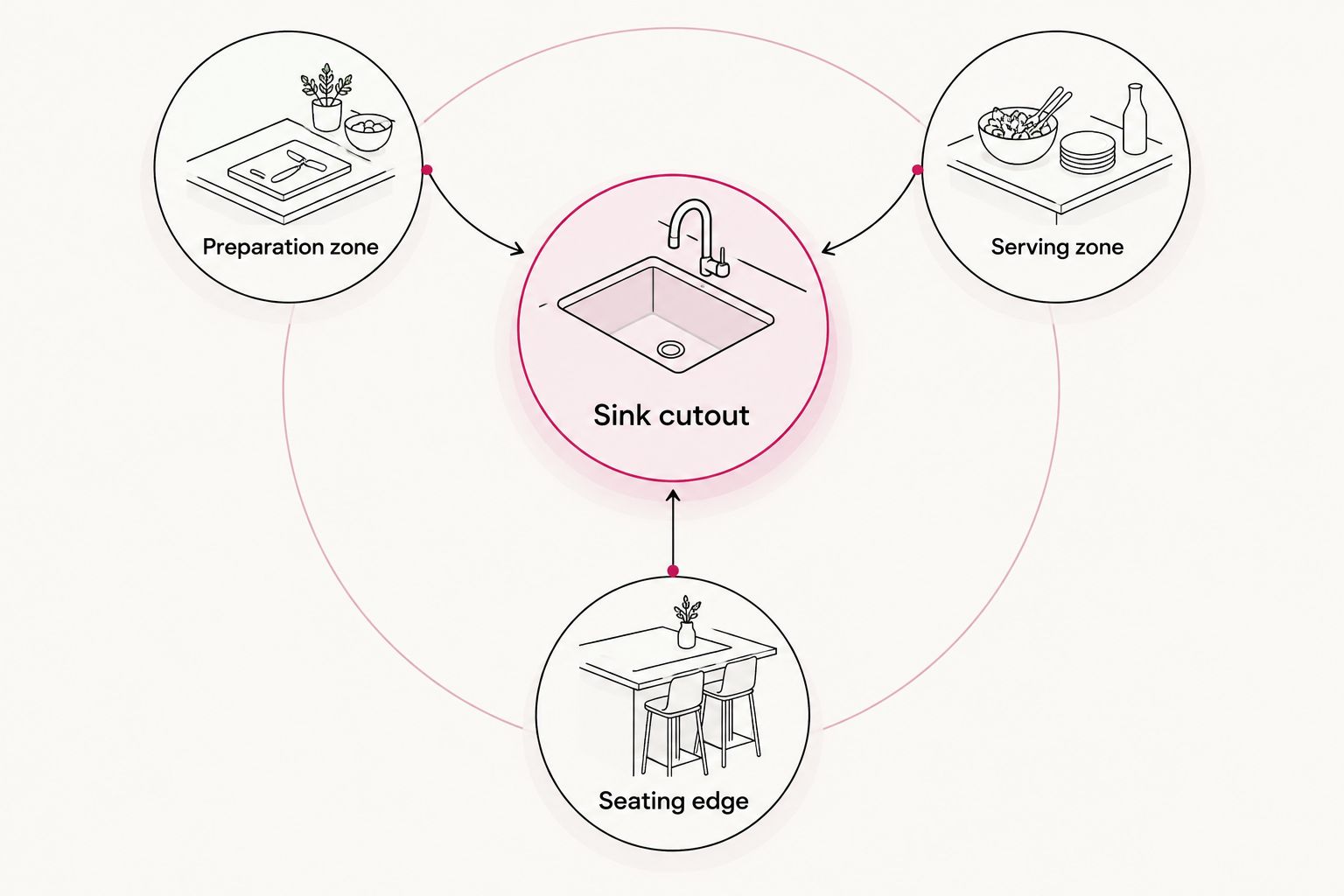
Keep 1 cutting board dedicated to citrus preparation rather than slicing directly on stone. A board protects the working surface from knife contact and helps contain juice; it does not replace prompt spill cleanup.
For sink selection, review how to choose a sink material for stone countertops. The countertop and sink are separate choices, but the mounting detail ties them together.
What to bring to a countertop discussion
Bring cabinet information, sink and faucet details, photographs of the room, and a clear description of how you entertain. Mention whether the bar sits indoors, beside a bright window, or in a space with exposure that needs additional material approval.
Ask Soaresstone to discuss the proposed wet bar countertop within the full fabrication and installation plan. Avoid choosing from a small sample without also resolving the cutouts, seams, edges, and support.
Request 2 written documents before approving fabrication: the proposed layout and the care instructions for your selected material. Use the layout to confirm what will be cut; use the care instructions to decide whether the maintenance fits your household.
A useful project brief for 2026 identifies:
- Your preferred material and an acceptable alternative.
- The approved slab or manufactured pattern.
- Sink and faucet specifications.
- Edge profile, seam locations, and seating support.
- Who handles each part of preparation and installation.
Discuss your countertop project
Talk through material selection, fabrication, and installation for your New England home.
How the materials are ranked
This 2026 ranking prioritizes everyday spill handling, citrus tolerance, maintenance, and practical indoor use before decorative appearance. Quartz takes the default position because it removes routine sealing while providing a suitable surface for regular drink preparation.
Granite ranks next for natural-stone utility. Quartzite earns its place for natural veining with verified material performance, while marble serves a narrower buyer who accepts etching. The ranking compares material categories, not tested brands or individual slabs.
Which wet bar countertop should you choose?
Choose quartz if you are undecided. It solves the maintenance problem most directly for an indoor wet bar without asking you to embrace acid etching or manage a natural-stone sealing routine.
Choose granite when you prefer natural pattern and accept its care requirements. Choose verified quartzite when the slab's veining drives the design. Choose marble only when you knowingly accept a changing surface.
Soaresstone offers custom fabrication and installation across these four materials. Bring a clear use case to the discussion: frequent cocktail preparation, occasional serving, or a decorative centerpiece. That tells the fabricator more than a request for something simply “durable.”
FAQ
What’s the best countertop material for a wet bar in 2026?
Quartz is the best default for an indoor wet bar because it is nonporous and does not need routine sealing. Granite is a strong alternative when you want natural stone and accept slab-specific maintenance.
Is quartz better than granite for a wet bar?
Quartz is better when avoiding routine sealing is your main priority. Granite is better suited to homeowners who prefer natural slab variation and will follow the selected stone’s care instructions.
Can lemon juice damage a marble wet bar?
Yes, lemon juice can etch marble by reacting with its mineral surface. Sealing does not prevent that reaction, so use a preparation board and wipe up acidic spills promptly.
Does a wet bar countertop need sealing?
Engineered quartz does not need routine sealing, while natural-stone requirements depend on the selected slab and its treatment. Get material-specific instructions rather than following a universal sealing schedule.
Is quartzite the same thing as quartz?
No, quartzite is natural stone and engineered quartz is a manufactured countertop material containing minerals and binders. Their maintenance requirements differ, and quartzite needs slab-specific evaluation.
Can I use an indoor quartz countertop for an outdoor bar?
Do not use an indoor quartz selection outdoors unless its manufacturer explicitly approves that application. Sunlight and weather exposure require a separate material decision.
Does a honed finish stop marble from etching?
No, honing changes marble’s finish but does not prevent acid reactions. Choose honed marble for its appearance, not as protection against citrus damage.
One last thing
A dull mark and a dark stain are different problems. On marble, an acidic spill can etch the surface even when no colored stain remains. Adding sealer will not restore the lost finish.
Before committing, ask for care guidance that distinguishes staining, etching, and physical damage. Soaresstone wet bar countertop discussions should end with a material you understand, not just a slab you like.
Related guides
- How to clean quartz countertops without damaging them
- How to care for granite countertops
- How to prevent etching on marble countertops