
Best overall: quartz countertops for basement kitchenettes. Best for frequent cooking: granite. Best for a simple utility kitchenette: laminate. The best countertop material for basement kitchenette projects in 2026 is quartz when you want easy cleanup without routine sealing; choose another material only when its specific strengths better match how you use the room.
- Quartz is the best countertop material for basement kitchenette projects that prioritize easy cleaning and no routine sealing.
- Granite suits frequent cooking; solid surface suits homeowners who prioritize repairability and integrated sinks.
- Soaresstone fabricates and installs custom quartz, granite, quartzite, and marble countertops for New England homeowners.
- Fix basement moisture problems before installing cabinets or countertops; no countertop material solves a damp room.
Why this matters
A basement kitchenette has different pressures from a main-floor kitchen. You need a surface that handles sink splashes, coffee spills, and food preparation, but you also need cabinets, plumbing, and a room that stay dry. Countertop water resistance does not make the entire installation waterproof.
For a 2026 renovation, separate the material decision from the moisture decision. The U.S. Environmental Protection Agency recommends keeping indoor relative humidity below 60%, ideally between 30% and 50%. Address leaks, condensation, and damp cabinet bases before putting a finished countertop over them.
The next question is use. A snack station needs different heat protection and maintenance habits from a kitchenette used for daily meals. Pick for the work you actually do downstairs, not the most demanding kitchen you can imagine.
What makes the best basement kitchenette countertop
Use these criteria before choosing a color or slab:
- Water and stain management: Consider the countertop face, sink opening, seams, and cabinet protection together.
- Maintenance: Decide whether you want a surface that needs no routine sealing or accept the care required by natural stone.
- Heat exposure: Identify where hot cookware and countertop appliances will sit. Every option still needs appropriate protection.
- Repairability: Surface scratches, chipped edges, and damaged seams call for different repairs depending on the material.
- Basement installation: Check stairs, landings, doorways, cabinet support, and where sections can be joined.
- Appearance under lighting: View samples under the fixtures you will use downstairs, rather than relying on showroom lighting.
Your priorities should narrow the field before you compare patterns. If the room is primarily a coffee station, easy cleaning deserves more weight than the ability to tolerate intensive cooking.
Basement kitchenette countertops at a glance
The 2026 ranking below separates each material by its strongest use case. It is a decision guide, not a claim that every slab or manufactured surface performs identically.
| Rank and material | Best for | Standout feature | Key limitation |
|---|---|---|---|
| 1. Quartz | Everyday, low-maintenance use | Nonporous surface without routine sealing | Resin-containing surface needs heat protection |
| 2. Granite | Frequent cooking with natural stone | Good scratch resistance and heat tolerance | Absorbency and sealing needs vary by stone |
| 3. Solid surface | Repairability and integrated sinks | Compatible fabrication can create inconspicuous joints | Scratches and direct heat can damage the surface |
| 4. Quartzite | Natural veining with hardness | Hard natural stone with varied patterns | Requires slab-specific care and sealing assessment |
| 5. Laminate | Simple utility and snack stations | Decorative surface over a lightweight core | Water reaching the core can cause swelling |
| 6. Marble | Occasional-use, appearance-led spaces | Natural veining and a distinctive stone finish | Acids etch the surface, even when sealed |
1. Quartz: best basement kitchenette countertop for everyday use
Engineered quartz combines mineral particles with binders to create a nonporous countertop surface. You do not need routine stone sealing, making quartz a straightforward choice for a basement sink, coffee station, or everyday food-preparation area.
Quartz is not the same material as quartzite. Its binders also mean you should protect it from hot cookware and follow the surface manufacturer's instructions for countertop appliances.
Quartz pros:
- No routine sealing requirement.
- Nonporous surface helps simplify spill cleanup.
- Manufactured patterns offer options beyond natural slab variation.
- Suits both occasional snacks and regular meal preparation.
Quartz cons:
- Direct heat can damage the surface.
- Exposed edges can chip under impact.
- Seams and sink connections still require careful fabrication and installation.
Best for: Homeowners who want a basement kitchenette that is easy to use without adding a sealing task to their maintenance routine.
Choose the actual sample under your basement lighting. A pattern that looks subtle in daylight can appear busier beneath concentrated task lighting, especially on a short counter run.
Verdict: Buy quartz for the default basement kitchenette choice in 2026.
2. Granite: best basement kitchenette countertop for frequent cooking
Granite is natural stone that works well for food preparation and regular kitchen use. It provides good scratch resistance and heat tolerance, although trivets remain the right habit for hot cookware.
Different granites absorb liquids differently. Ask about the selected stone's sealing needs instead of assuming every granite countertop follows the same schedule.
Granite pros:
- Handles everyday food preparation well.
- Offers natural patterns rather than a manufactured repeat.
- Tolerates heat better than resin-bound surfaces, while still needing sensible protection.
- Provides a durable working surface when properly supported.
Granite cons:
- Some stones need sealing to reduce absorption.
- Pattern variation requires inspection of the actual slab.
- Corners and thin areas around openings remain vulnerable to impact.
Best for: A basement kitchenette used for frequent cooking by homeowners who want natural stone and accept material-specific care.
Keep a cutting board in the plan. A scratch-resistant countertop does not make direct cutting a good idea, and stone can dull knife edges.
Verdict: Buy granite when cooking performance and natural variation matter more than avoiding sealing.
3. Solid surface: best basement kitchenette countertop for repairability
Solid surface is a manufactured countertop material made with mineral fillers and resins. Compatible sinks and fabrication methods can create integrated assemblies with inconspicuous joints.
Its main advantage here is serviceability. Many surface scratches can be sanded or refinished, although repair methods depend on the material, finish, and damage.
Solid surface pros:
- Nonporous countertop material.
- Compatible integrated sinks reduce exposed transitions.
- Many superficial scratches can be refinished.
- Offers a visually quiet alternative to strongly patterned stone.
Solid surface cons:
- Scratches more readily than harder stone options.
- Direct heat can scorch or damage the material.
- Not every stain, crack, or burn is a simple repair.
Best for: Homeowners who prioritize a repairable surface and an integrated sink arrangement over stone hardness.
Ask the fabricator to explain the sink connection and future repair process. An inconspicuous joint is useful, but it does not replace proper plumbing or cabinet protection.
Soaresstone's stated countertop materials are quartz, granite, quartzite, and marble; solid surface is a separate category to discuss with a provider that explicitly offers it.
Verdict: Buy solid surface for repairability; skip it if scratch resistance is your leading priority.
4. Quartzite: best basement kitchenette countertop for hard natural stone
Quartzite is a natural metamorphic stone, not an engineered quartz surface. It suits homeowners who want natural veining and a hard work surface without choosing marble.
The mineral quartz has a hardness of 7 on the Mohs scale, but mineral hardness alone does not establish a finished countertop's stain resistance or care requirements. Confirm the actual slab's identity, finish, and sealing needs before selection.
Quartzite pros:
- Provides natural veining and slab variation.
- True quartzite offers strong scratch resistance.
- Suits homeowners who want a natural alternative to engineered quartz.
Quartzite cons:
- Porosity and sealing needs require slab-specific assessment.
- Natural fissures and pattern changes need inspection.
- Cutouts, exposed edges, and support require careful planning.
Best for: Homeowners making the countertop a design feature who also want the hardness associated with true quartzite.
Do not choose from the name alone. Ask for confirmation of the stone type and written care guidance, particularly if you are trying to avoid the acid sensitivity associated with marble.
Verdict: Buy quartzite for natural veining and hardness, not as a shortcut to maintenance-free stone.
5. Laminate: best basement kitchenette countertop for simple utility
Laminate countertops use a decorative surface bonded to a supporting core. They make sense for a straightforward snack station where you want a practical worktop rather than a stone focal point.
The critical weakness is below the decorative surface. Water entering an exposed core through a damaged seam, edge, or sink opening can cause swelling.
Laminate pros:
- Lightweight compared with stone countertop assemblies.
- Offers a broad range of decorative finishes.
- Routine surface cleaning is straightforward.
Laminate cons:
- Moisture damage to the core is difficult to reverse.
- Direct heat can damage the surface.
- Deep cuts and chips are not repaired like refinishable solid surface.
Best for: A simple utility kitchenette with controlled moisture, careful sink detailing, and limited demands on the work surface.
For a 2026 basement project, do not treat laminate as a solution to dampness. Inspect the sink cutout and joints, and fix any leak promptly rather than waiting for visible swelling.
Verdict: Buy laminate for simple utility; skip it where moisture problems remain unresolved.
6. Marble: best basement kitchenette countertop for occasional entertaining
Marble gives an occasional-use kitchenette a natural stone finish with distinctive veining. Its trade-off is acid sensitivity: lemon juice, vinegar, and other acidic substances can etch the surface.
Etching is a chemical change to the finish, not simply a stain. Sealing can reduce absorption, but it does not prevent acid etching.
Marble pros:
- Offers distinctive natural veining.
- Provides a stone surface for serving and food preparation.
- Suits homeowners who accept visible signs of use.
Marble cons:
- Acidic food and drinks can etch the finish.
- Absorbed spills can leave stains.
- Scratches and wear are more visible than on harder stone choices.
Best for: An appearance-led entertaining kitchenette whose owner accepts patina and prompt cleanup.
Be honest about your habits. If guests will leave citrus drinks beside the sink and you expect an unchanged finish, marble is the wrong match.
Verdict: Buy marble only if you accept etching; skip it for a worry-free family snack station.
Plan the basement installation before fabrication
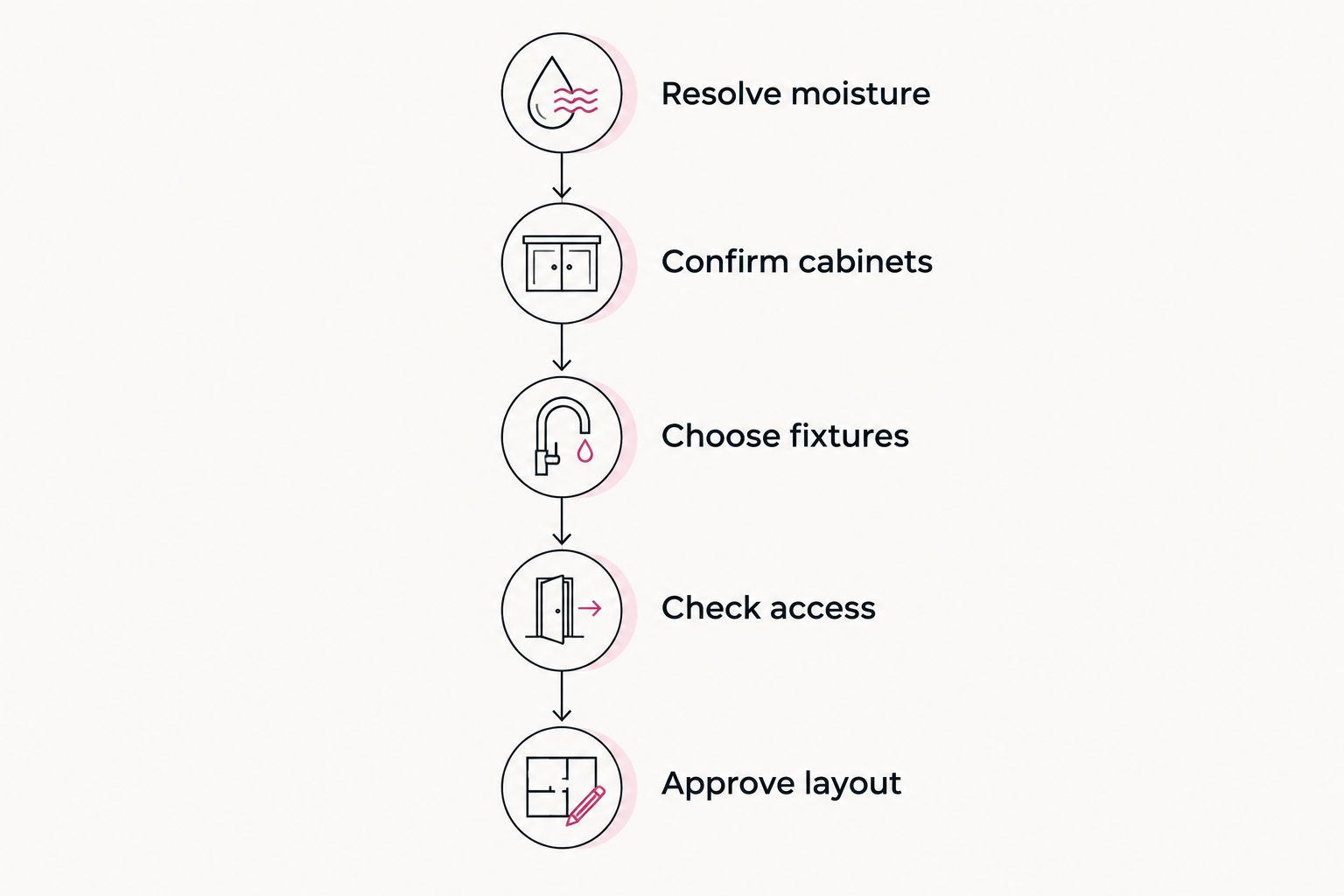
The countertop material is only part of a successful installation. For your 2026 project, settle these decisions before final measurement:
- Resolve moisture: Repair leaks and address persistent condensation before covering cabinet bases.
- Confirm cabinets: Make sure the cabinets are installed, level, and ready to support the selected countertop assembly.
- Choose fixtures: Finalize the sink, faucet, and appliance models so openings match their requirements.
- Check access: Measure stairs, turns, landings, and doors with the installer; the access route affects section planning.
- Approve layout: Review seams, exposed edges, sink placement, and any overhang support before fabrication.
A countertop that fits the cabinets still needs to reach the basement safely. Access planning belongs before fabrication, not on installation day.
Thickness also belongs in that conversation. Stone countertops commonly use slabs described as 2 centimeters or 3 centimeters thick; the right assembly depends on the material, cabinet support, edge design, and installation details. Do not select thickness from appearance alone.
Soaresstone is a fit for New England homeowners seeking custom stone countertop fabrication and installation. Bring room measurements, cabinet details, and fixture selections to the conversation, then confirm which decisions must be final before templating.
Plan your basement countertop project
Discuss custom quartz, granite, quartzite, or marble fabrication and installation for your kitchenette.
How the materials rank
This ranking prioritizes cleaning, moisture management, maintenance, heat exposure, repairability, and basement installation needs. Quartz takes the default position because it combines a nonporous surface with no routine sealing; the remaining materials earn distinct slots rather than competing for the same buyer.
The ranking is not a laboratory test or a comparison of individual manufacturers. Your selected slab, manufactured surface, fabrication details, and care instructions remain part of the decision.
Which basement kitchenette countertop should you choose?
Choose quartz unless you have a clear reason to choose something else. Granite fits frequent cooking with natural stone; solid surface fits repairability; quartzite fits natural veining and hardness; laminate fits simple utility; marble fits owners comfortable with patina.
For a 2026 basement kitchenette, moisture control and installation details come before decorative upgrades. Soaresstone offers custom fabrication and installation of the four stone and quartz categories in this guide, so keep the conversation focused on the material and layout that match your room.
FAQ
What’s the best countertop material for a basement kitchenette?
Quartz is the best default countertop material for a basement kitchenette because its nonporous surface requires no routine sealing. Protect it from direct heat and plan the sink connection carefully.
Is quartz better than granite for a basement kitchen?
Quartz is better when avoiding routine sealing is your priority; granite is better when you want natural stone for frequent cooking. Granite’s sealing needs depend on the selected stone, and both materials need properly supported installation.
Can a quartz countertop fix a damp basement kitchenette?
A quartz countertop cannot fix a damp basement kitchenette. Resolve leaks, condensation, and moisture affecting cabinets before installation, even when the countertop surface itself is nonporous.
Does quartzite need sealing in a basement kitchenette?
Quartzite needs a slab-specific sealing assessment. Ask the fabricator for care instructions for the actual stone rather than assuming that hardness makes it nonabsorbent.
Is laminate suitable beside a basement kitchenette sink?
Laminate is suitable beside a sink when its edges, joints, and cutout are properly detailed and kept intact. Water reaching the supporting core can cause swelling, so leaks and damaged connections need prompt attention.
Can I put hot cookware directly on quartz?
Use a trivet instead of placing hot cookware directly on quartz. Its resin-containing surface can suffer heat damage; also follow appliance and countertop manufacturer instructions.
Should I choose marble for a basement wet bar or kitchenette?
Choose marble only if you accept etching and visible wear. Acidic drinks and food can change its finish, and sealing does not prevent that reaction.
One last thing
The sink opening deserves as much attention as the countertop face. A water-resistant surface does not protect a cabinet from a leaking faucet connection, failed joint, or exposed supporting core.
Before approving fabrication, ask the installer to explain how the sink is supported and how the surrounding cabinet is protected. That practical conversation matters more than choosing between two nearly identical countertop colors.
Related guides
- Compare granite and quartz for a kitchen remodel
- Plan a countertop template appointment
- Choose countertops for an in-law suite kitchenette