
Best overall: quartz. Best for a working butler’s pantry: granite countertops for coffee bars and butler’s pantries. Best for natural veining: quartzite. Best for a display-first coffee nook: marble. For your 2026 project, choose around spills, appliance heat, and upkeep—not appearance alone.
- Quartz is the best countertop material for coffee bar use when easy cleanup matters most.
- Granite suits working butler’s pantries; quartzite suits homeowners who want natural veining and scratch resistance.
- Marble suits display-first coffee nooks, but acidic spills can etch the surface even after sealing.
- Soaresstone fabricates and installs custom quartz and natural stone countertops for New England homeowners.
Why this matters
A coffee bar combines dark liquids, wet accessories, and appliances in a small footprint. A butler’s pantry adds serving dishes, food preparation, and cleanup. The best surface for one is not automatically the best surface for the other.
Start with your actual routine. If you empty the drip tray beside the machine every morning, low-maintenance cleanup deserves priority. If your pantry receives hot cookware from the kitchen, heat protection and a dedicated landing area matter more than matching the backsplash.
Soaresstone is a fit for New England homeowners seeking custom coffee bar countertops fabricated and installed for their space. Soaresstone designs and installs marble, granite, quartz, and quartzite surfaces; the material choice should follow how you intend to use that space.
For a 2026 remodel, settle the appliance arrangement before choosing the slab. A beautiful surface cannot fix a machine that blocks the sink or a cabinet door that opens into your serving area.
What makes the best countertop material for a coffee bar
Use these five criteria to compare materials for your 2026 coffee bar or butler’s pantry:
- Spill resistance: Coffee, tea, syrup, and wine need prompt cleanup. Nonporous quartz removes the sealing step, while natural stone requires a slab-specific care plan.
- Acid tolerance: Lemon juice and vinegar can etch marble. A stain-resistant surface and an acid-resistant surface are not the same thing.
- Heat tolerance: Natural stone generally tolerates heat better than resin-bound quartz, but trivets remain the right choice for hot cookware on every material.
- Maintenance: Consider cleaning products, sealing needs, and your willingness to accept visible wear. Choose the routine you will actually follow.
- Layout and appearance: Judge the slab’s pattern across the usable counter, including sink cutouts and seams. A small sample cannot show where a large vein will land.
No material wins every category. Quartz takes the default recommendation because it combines stain resistance with straightforward daily care, not because it is immune to damage.
Countertop materials at a glance
| Rank | Material | Best for | Standout feature | Key limitation |
|---|---|---|---|---|
| 1 | Quartz | Everyday coffee stations | Nonporous surface without routine sealing | Resin can suffer heat damage |
| 2 | Granite | Working butler’s pantries | Natural stone suited to varied kitchen tasks | Absorption and sealing needs vary by slab |
| 3 | Quartzite | Natural veining with scratch resistance | Hard natural stone with distinctive movement | Requires careful identification and slab-specific care |
| 4 | Marble | Display-first coffee nooks | Natural veining and a surface that develops patina | Acidic spills can etch it |
These rankings separate use cases rather than promise a universal winner. If appearance outranks easy maintenance for you, marble can be the right personal choice despite its lower position.
1. Quartz: best coffee bar countertop for daily convenience
Quartz countertops combine mineral particles with resin binders. The resulting surface is nonporous and does not need routine sealing, making quartz a practical choice around coffee drips, milk spills, and a frequently emptied water reservoir.
Choose quartz when you want your coffee station to clean up without a separate sealing routine. Soaresstone offers custom quartz countertop fabrication and installation, allowing the surface to be planned around your cabinetry and appliances.
Quartz pros
- Nonporous construction helps resist absorbed stains from everyday spills.
- Routine sealing is not part of quartz countertop maintenance.
- Manufactured patterns offer an alternative to the variation of natural slabs.
- A simple daily cleaning routine suits a frequently used beverage station.
Quartz cons
- Resin binders are vulnerable to excessive heat; use trivets and follow appliance instructions.
- Strong chemicals and abrasive cleaners can damage the surface or finish.
- Quartz does not reproduce the individual geological character of a natural slab.
Best for: An indoor coffee bar used every day by people who prioritize easy care.
Before selecting quartz, check the instructions for your espresso machine, kettle, and any warming appliance. A coffee machine is not the same heat source as a pan from the oven, but its placement still needs to respect the appliance and surface manufacturers’ requirements.
Choose a pattern you can inspect under your room’s lighting. Very plain finishes can make crumbs and dried droplets conspicuous; a patterned surface can disguise them without making them disappear. Cleaning still matters.
Verdict: Buy quartz for the default everyday coffee bar; skip it if you expect to place hot cookware directly on the counter.
2. Granite: best pantry countertop for varied kitchen work
Granite is a natural stone with mineral patterns that vary from slab to slab. It suits a butler’s pantry that serves as an extension of the kitchen, rather than only a place to display cups and a coffee machine.
Choose granite when your counter needs to accommodate serving, preparation, and beverage cleanup. Its heat tolerance is an advantage over resin-bound quartz, but it does not eliminate the need for trivets or careful handling.
Granite pros
- Natural mineral patterns give each slab an individual appearance.
- Granite generally handles heat exposure better than engineered quartz.
- Its durable surface suits varied household kitchen tasks.
- Patterned slabs offer an alternative to a uniform manufactured finish.
Granite cons
- Porosity varies; sealing requirements must match the selected stone.
- Busy patterns can compete with a strongly patterned backsplash.
- Edges and narrow areas around cutouts remain vulnerable to impact damage.
Best for: A working butler’s pantry used for serving, food preparation, and drinks.
Inspect the actual slab instead of relying only on a material name or a small sample. Look at the section that will become the coffee station, especially if you want a quieter pattern behind appliances. Ask how the layout will handle mineral changes, seams, and the sink opening.
Do not adopt a universal resealing calendar. The stone’s absorption, existing treatment, and use determine the care plan. Ask for written cleaning and sealing instructions for the slab you select.
A granite pantry also needs a protected landing spot for cookware. Heat resistance is a useful property, not permission to ignore thermal shock or set an oven-hot dish against a vulnerable edge.
Verdict: Buy granite for a multipurpose pantry when you accept slab-specific sealing and care.
3. Quartzite: best coffee bar countertop for natural veining
Quartzite is a natural metamorphic stone, not engineered quartz. Genuine quartzite is hard and offers strong scratch resistance, making it an option for homeowners who want natural movement without choosing marble’s softer surface.
The important distinction is identification. A stone’s commercial name or marble-like appearance does not establish that it behaves like quartzite. Confirm the material and its care requirements before approving fabrication.
Quartzite pros
- Natural veining can create a focal point behind a compact coffee setup.
- Genuine quartzite offers strong scratch resistance.
- Its mineral structure does not rely on the resin binders used in engineered quartz.
- Each slab provides an individual pattern rather than a repeated manufactured design.
Quartzite cons
- Absorption and sealing needs vary between stones and slabs.
- Commercial stone labels require verification rather than assumption.
- Dramatic veining needs deliberate planning around seams and cutouts.
Best for: A design-focused coffee bar where natural veining and scratch resistance lead the decision.
Compare the full slab with your cabinet finish, wall color, and intended backsplash. Decide which area of the stone you want visible after the coffee machine, grinder, and accessories are in place. Otherwise, the equipment can conceal the feature that drove your choice.
Ask whether the proposed stone contains fissures, filled areas, or other characteristics that affect fabrication and care. These questions concern the actual slab; they are more useful than treating every quartzite as identical.
Quartzite is not the low-maintenance substitute for quartz. You are choosing natural stone, with the inspection and care decisions that come with it.
Verdict: Buy quartzite for verified natural stone and distinctive veining; wait until identification and maintenance requirements are clear.
4. Marble: best coffee nook countertop for a display-first space
Marble offers natural veining and a surface that develops visible wear with use. It belongs in a coffee nook when you value that appearance and accept the maintenance trade-off—not when you want every spill to leave no trace.
Choose marble only if etching and patina fit your expectations. Sealing helps reduce liquid absorption; it does not stop acidic substances from reacting with the stone.
Marble pros
- Natural veining suits a display-focused nook or serving counter.
- The material develops a patina that some homeowners deliberately prefer.
- A honed finish provides an alternative to polished marble’s reflective appearance.
Marble cons
- Acidic drinks and cleaners can etch the surface.
- Marble scratches more readily than genuine quartzite.
- Sealing does not make marble stain-proof or etch-proof.
Best for: A display-first coffee nook whose owner accepts visible wear.
Think beyond coffee. A butler’s pantry can also receive citrus drinks, wine, salad dressings, and vinegar-based foods. Those uses make marble’s acid sensitivity more relevant than it would be on a mostly decorative counter.
Honed marble is not etch-proof. Its lower sheen can make some changes less conspicuous, but choosing that finish does not change the underlying chemistry.
Use a removable tray for syrups and accessories, then clean beneath it regularly. A tray organizes the station and catches some mess; it does not turn marble into a maintenance-free surface or protect every exposed area.
Verdict: Buy marble for a patina-friendly display space; skip it if permanent-looking marks will bother you.
How the materials rank
The 2026 ranking prioritizes spill resistance, acid tolerance, heat tolerance, maintenance, and layout flexibility. These are material-selection criteria, not results from a proprietary product test.
Quartz ranks first for routine coffee use because it removes sealing from the maintenance plan. Granite takes the working-pantry slot because its natural-stone durability suits broader kitchen tasks. Quartzite serves the homeowner who prioritizes verified natural veining and hardness. Marble serves the homeowner who accepts etching and wear as part of the material.
The ranking does not compare individual slabs, warranties, or fabrication proposals. Those decisions require the specific material and project details.
Plan the counter around the appliances
A conventional kitchen base cabinet is typically 24 inches deep, with a finished countertop around 25.5 inches deep and a work surface about 36 inches high. These are common planning references, not required dimensions for your coffee bar. Adapt the layout to your cabinetry, appliances, and access needs.
Measure each appliance’s full operating envelope, not just its footprint. A machine that fits beneath an upper cabinet can still be awkward if you cannot lift out the water tank. Include cords, plug access, and any clearances required by the manufacturer.
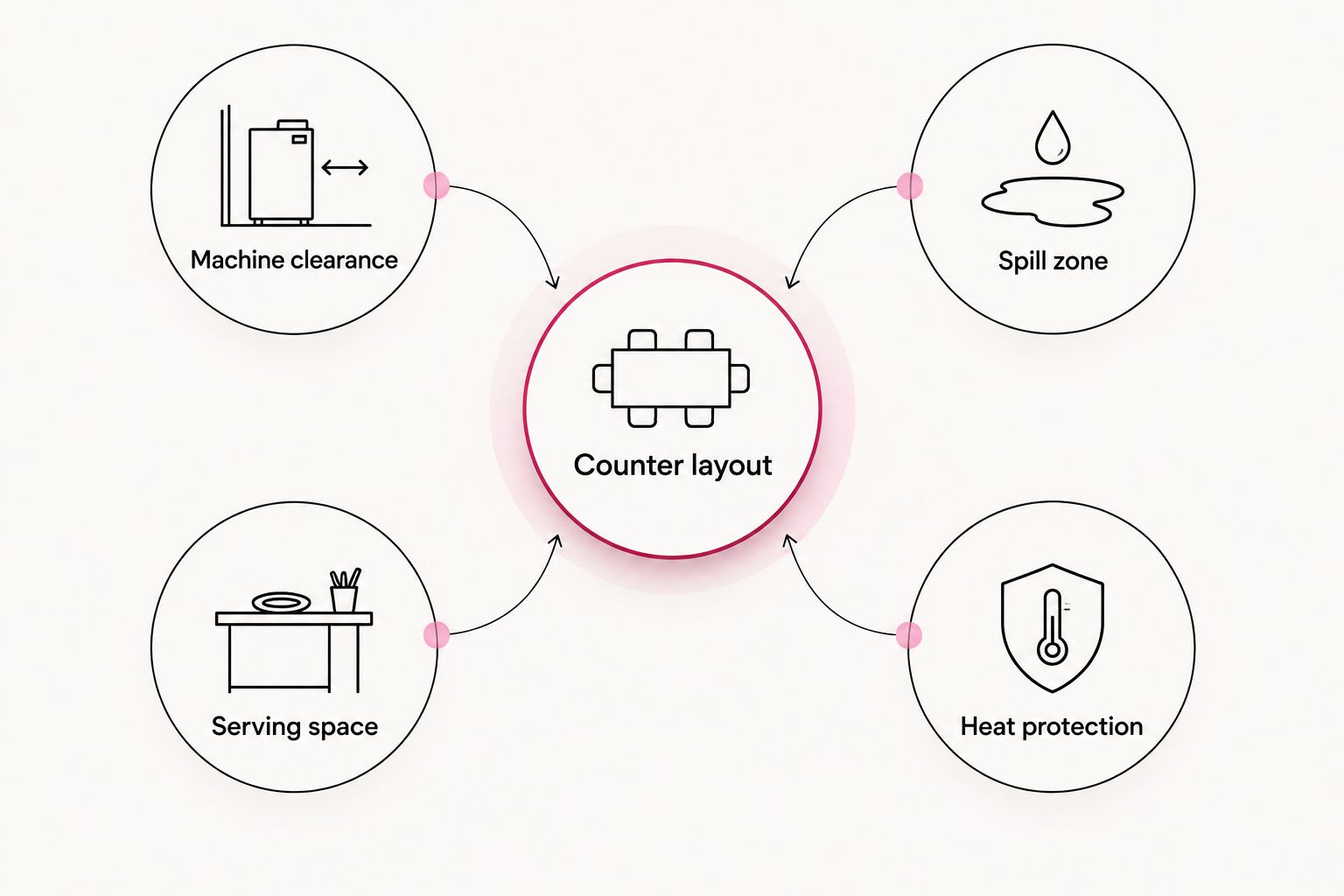
Machine clearance
Check how you refill water, remove the drip tray, load beans, and open cabinet doors. Decide whether the machine will stay in place during those tasks. Do not assume you will happily pull a heavy appliance forward every morning.
Spill zone
Keep the area where you empty trays and rinse accessories easy to reach. If the layout includes a sink, settle its model and mounting arrangement before countertop templating. The sink opening affects how much uninterrupted working surface remains.
Serving space
Reserve a clear area for cups and dishes rather than filling the entire counter with equipment. In a butler’s pantry, identify where a serving platter will sit while you prepare drinks. This is a layout decision, not a reason to buy a different stone.
Heat protection
Give trivets a permanent home near the area that receives cookware. Follow appliance instructions for protective mats; a mat is not automatically suitable for every machine. Keep the care requirements accessible to everyone who uses the pantry.
Review the proposed seam and edge locations with the fabricator. Ask how the layout preserves usable space around the sink and how any overhang will be supported. These details remain important whether you select quartz, granite, quartzite, or marble.
Plan your custom countertop
Discuss quartz and natural stone fabrication and installation for your New England home.
Which countertop material should you choose?
For most everyday coffee bars in 2026, choose quartz. Its nonporous surface and lack of routine sealing make it the clearest default when convenience leads your decision.
Choose granite when the butler’s pantry doubles as a working kitchen area. Choose verified quartzite when natural veining and scratch resistance matter more than minimizing maintenance. Choose marble when you knowingly accept etching and patina.
Bring Soaresstone your appliance dimensions, cabinet layout, sink selection, and preferred materials. That gives a custom coffee bar countertop project a practical starting point: the surface is designed around what you need to do, not only what you want to photograph.
FAQ
What’s the best countertop material for a coffee bar?
Quartz is the best default countertop material for an everyday indoor coffee bar because it is nonporous and does not need routine sealing. Granite is a strong alternative when the space also handles broader kitchen tasks.
Is quartz or granite better for a butler’s pantry?
Granite is the stronger choice when heat tolerance and varied kitchen work lead the decision; quartz is the simpler choice when routine maintenance leads. Use trivets on both, and confirm the granite slab’s sealing requirements.
Will coffee stain a quartz countertop?
Quartz resists absorbed coffee stains, but it is not stain-proof. Wipe spills promptly and follow the surface manufacturer’s cleaning instructions rather than using abrasive cleaners.
Can I put an espresso machine on quartz?
An espresso machine belongs on quartz only when the setup meets the appliance and countertop manufacturers’ instructions. Check heat exposure, ventilation, clearance, and any requirements for protective accessories.
Is quartzite the same material as quartz?
Quartzite is natural stone; engineered quartz combines mineral particles with resin binders. Genuine quartzite requires slab-specific inspection and care, while engineered quartz does not need routine sealing.
Does sealing stop marble from etching?
Sealing does not prevent marble from etching. It helps reduce liquid absorption, but acidic substances can still react with the stone and change its surface finish.
How do I compare countertop quotes for a 2026 coffee bar?
Compare quotes using the same material, dimensions, edge profile, sink cutout, backsplash scope, and installation requirements. Ask each fabricator to identify what the proposal includes so you compare the same work.
One last thing
Staining and etching are different problems. A stain involves discoloration; an etch involves a chemical change to the surface. Buying sealer to prevent every marble mark addresses only part of the risk.
Before you approve a material, describe the mark that would bother you most: a dark spill, a dull patch, a scratch, or a heat-damaged area. Then match the surface and care plan to that concern. The right countertop is the one whose trade-offs you understand before installation.
Related guides
- How to choose between granite and quartz for a kitchen remodel
- How to clean quartz countertops without damaging them
- How to plan a countertop template appointment