
Best overall: quartz. Best natural stone for a working island: granite. Best for a dramatic waterfall: quartzite. Best for pastry preparation and a lived-in finish: marble. This 2026 guide compares the best countertop material for kitchen island use by cleaning, heat tolerance, appearance, and installation needs.
- Quartz is the best countertop material for kitchen island use when low maintenance comes first.
- Granite suits working kitchen islands where natural stone and heat tolerance matter.
- Quartzite suits statement waterfall islands; inspect the actual slab before choosing.
- Marble suits pastry preparation and homeowners who accept etching and patina.
- Soaresstone fabricates and installs custom quartz, granite, quartzite, and marble countertops for New England homeowners.
Why this matters
Your island handles more than food preparation. It is also a place for meals, homework, serving dishes, and conversations, so the right surface must fit how you actually use the kitchen.
A beautiful slab does not solve an awkward seam or an unsupported seating overhang. Soaresstone designs, fabricates, and installs custom stone and quartz surfaces; bring the island layout into the material discussion from the start.
For a 2026 kitchen remodel, choose the maintenance routine before the color. If you dislike visible wear, marble is the wrong starting point regardless of how well its veining matches your cabinets.
What makes the best countertop material for a kitchen island?
Use these criteria to judge the materials before comparing samples:
- Low upkeep: Decide whether you want a surface that requires no sealing or accept natural stone with slab-specific care.
- Heat tolerance: Consider hot cookware and countertop appliances, but plan to use trivets with every material.
- Acid resistance: Lemon juice, vinegar, and wine matter particularly when you are considering marble.
- Pattern control: Compare the whole slab or manufacturing pattern, not just a small sample.
- Layout fit: Check seams, sink cutouts, seating projections, and waterfall panels before approving fabrication.
- Wear acceptance: Decide whether marks and patina belong in your kitchen or will bother you every day.
Material durability and installation quality answer different questions. A hard surface still needs sound cabinet support, carefully planned cutouts, and an appropriate edge.
Kitchen island countertop materials at a glance
| Material | Best for | Standout feature | Key limitation |
|---|---|---|---|
| Quartz | Low-maintenance everyday use | Engineered surface that requires no sealing | Resin binder needs protection from excessive heat |
| Granite | A natural-stone working island | Heat tolerance with distinctive mineral patterns | Absorbency and sealing needs vary by slab |
| Quartzite | A statement waterfall island | Natural veining in a hard stone | Slab identification, fabrication, and sealing need attention |
| Marble | Pastry preparation and an evolving finish | Natural veining and a cool work surface | Acids etch the surface; sealing does not prevent this |
This 2026 ranking separates the materials by use case rather than treating appearance as the only deciding factor. Quartz wins the default recommendation; the natural stones win when you specifically want their appearance and accept their care requirements.
1. Quartz: best kitchen island countertop for low upkeep
Quartz countertops are engineered surfaces made with mineral material and a resin binder. They require no sealing and offer patterns that let you coordinate the island with surrounding counters. That combination makes quartz the practical starting point for a busy indoor kitchen.
Choose quartz when you want routine cleaning without adding stone sealing to your household tasks. It is especially useful when the island serves as both a preparation area and an everyday eating surface.
Quartz pros:
- Requires no sealing.
- Offers a broad choice of colors and manufactured patterns.
- Resists many everyday stains when spills receive prompt attention.
- Makes it easier to coordinate an island with matching perimeter counters.
Quartz cons:
- Excessive heat can damage the resin binder; use trivets under hot cookware.
- Edges can chip, and the surface is not scratch-proof.
- Manufactured veining does not reproduce every detail of a natural slab.
Do not choose quartz on the assumption that it is indestructible. Use cutting boards, follow the surface manufacturer's cleaning instructions, and check guidance for appliances that transfer heat through their feet or base.
Best for: Households that prioritize straightforward maintenance over natural-stone variation.
Verdict: Buy quartz for a low-maintenance kitchen island in 2026. Choose another material only when natural stone is an essential part of the design.
2. Granite: best kitchen island countertop for a working natural-stone surface
Granite is a natural stone with visible mineral grains and slab-to-slab variation. It handles normal kitchen work well and offers greater heat tolerance than resin-bound quartz, although trivets remain the right habit. The individual slab determines the appearance, not just the material name.
Choose granite when you want natural stone on an island used for chopping, serving, and daily cooking. Inspect its pattern across the entire surface; a small sample cannot show how a large mineral cluster will sit beside a sink or seating edge.
Granite pros:
- Offers natural mineral patterns rather than a manufactured design.
- Tolerates heat well, without making direct hot-pan placement advisable.
- Resists everyday scratching, while still requiring a cutting board.
- Works for homeowners who prefer grain and movement to marble-style veining.
Granite cons:
- Sealing requirements vary with the stone's absorbency.
- Strong patterns can make seams more noticeable.
- Edges and narrow areas around cutouts remain vulnerable to impact.
Ask for care instructions for the selected granite rather than following a universal sealing calendar. Some slabs absorb liquids more readily than others, so maintenance should match the stone.
Best for: Home cooks who want a durable natural-stone work surface and accept slab-specific care.
Verdict: Buy granite for a working island when natural stone matters more than avoiding sealing. Do not choose a slab until you have seen its full pattern.
3. Quartzite: best kitchen island countertop for a statement waterfall
Quartzite is natural stone, not engineered quartz. Genuine quartzite is hard and often has flowing veining that makes a large island a focal point. It suits a waterfall design when the slab layout carries that movement from the countertop into the vertical panels.
The name alone is not enough to approve a slab. Stone sold under commercial labels can have different properties, so confirm identification, care requirements, and fabrication suitability with the fabricator.
Quartzite pros:
- Combines natural veining with a hard stone surface.
- Offers distinctive movement across a large island.
- Gives waterfall panels a connected natural-stone appearance when planned carefully.
- Provides an alternative to marble for homeowners who want veining without marble's acid sensitivity.
Quartzite cons:
- Absorbency varies, and sealing can be necessary.
- Hardness makes fabrication demanding; cutouts and edges need careful planning.
- Vein continuity across seams or waterfall corners is not automatic.
For a 2026 waterfall island, approve the layout of the actual slabs before fabrication. A waterfall corner changes the direction of the surface, so the most attractive arrangement depends on where the pieces are cut and joined.
Best for: Homeowners who want the island to be the kitchen's main natural-stone feature.
Verdict: Buy quartzite for a statement waterfall; hold approval until the slab layout and support plan are settled.
4. Marble: best kitchen island countertop for pastry and patina
Marble is a natural stone valued for its veining and cool work surface. It suits pastry preparation, though cutting and food preparation still call for appropriate boards and cleaning. Its main trade-off is acid sensitivity, not simply whether it has been sealed.
Lemon juice, vinegar, and other acidic substances can etch marble, leaving dull marks. An impregnating sealer helps limit absorption but does not stop that chemical reaction.
Marble pros:
- Offers natural veining with a distinct appearance.
- Provides a cool surface suited to pastry work.
- Develops a lived-in finish for homeowners who appreciate visible use.
Marble cons:
- Acids can etch the surface even after sealing.
- It scratches more readily than granite or genuine quartzite.
- Spills need prompt attention, and staining remains possible.
A honed finish changes how light reflects from marble, but it does not make marble acid-proof. Choose the finish for its appearance and feel, not as a substitute for accepting wear.
Best for: Bakers and homeowners who deliberately want marble and accept its evolving finish.
Verdict: Buy marble if patina is part of the appeal; skip marble if every dull spot will feel like damage.
Plan the island before approving the material
The best countertop material for kitchen island use must work with the actual layout. Soaresstone is a countertop fabricator and installer for New England homeowners planning custom quartz, granite, quartzite, or marble surfaces.
For your 2026 project, settle these decisions before the slab is cut:
View slabs
Review the full natural-stone slab or the complete quartz pattern. Look for where movement will fall across the preparation area, sink, and seating side. Compare samples beside cabinet and flooring finishes in your kitchen's lighting.
Map seams
Ask where seams will sit and how patterns will meet. Do not assume a large island will be seamless: slab dimensions, access, cutouts, and fabrication requirements all affect the answer. Waterfall panels need their own layout review.
Check supports
Confirm cabinet support and any seating projection with the fabricator. Common countertop thicknesses include 20 mm and 30 mm, a 10 mm difference, but thickness alone does not determine a safe unsupported overhang. Material, cutouts, supports, and the installation design also matter.
Confirm details
Finalize the sink, faucet holes, edge profile, and appliance requirements before fabrication. A small edge sample helps you judge comfort at the seating side. Written layout approval prevents a material choice from becoming a last-minute design decision.
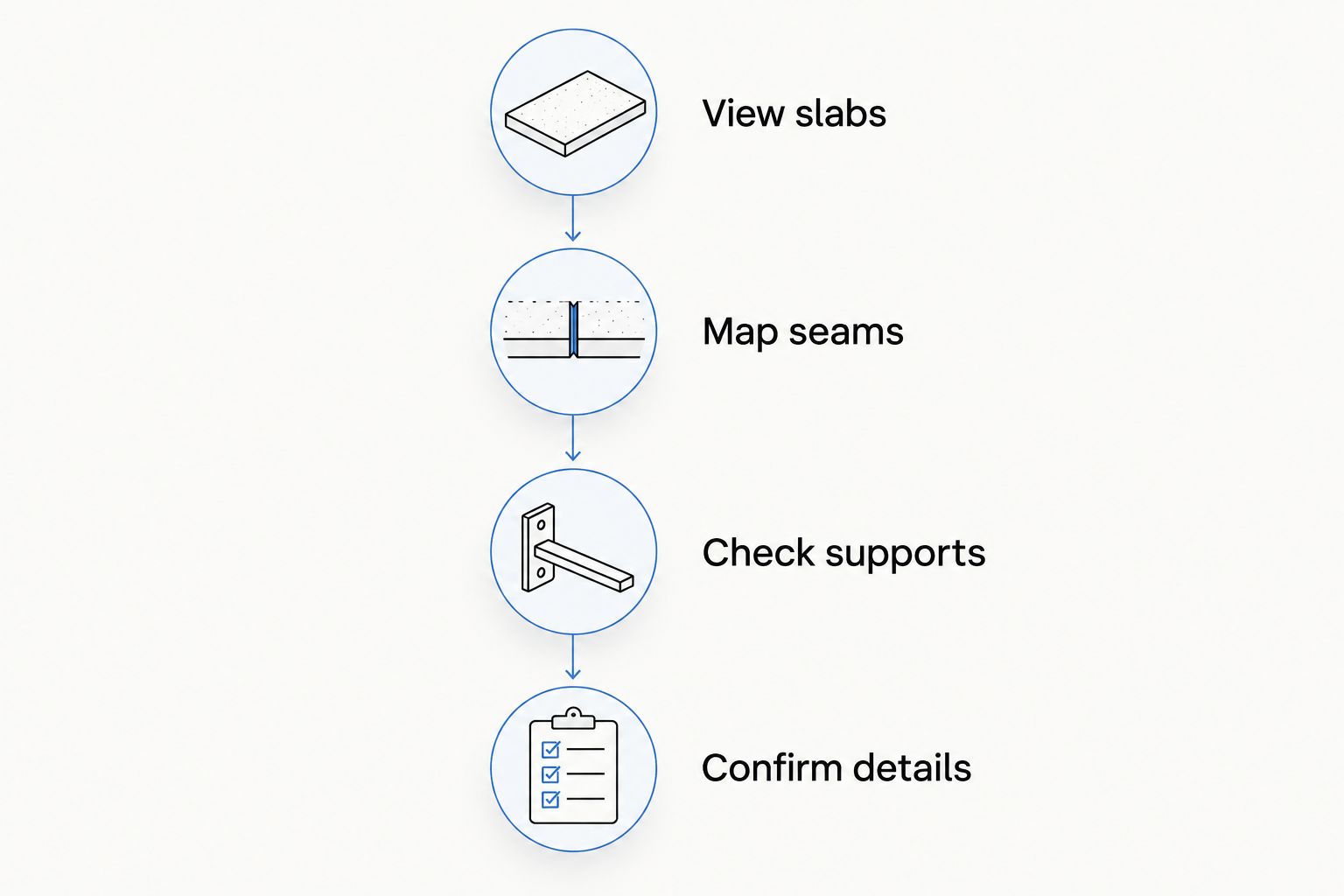
Keep these decisions together rather than choosing a slab first and solving the island later. The fabrication plan is where appearance, seating, and daily use meet.
Plan your custom kitchen island
Discuss quartz, granite, quartzite, or marble fabrication and installation with Soaresstone.
How the materials rank
The ranking uses maintenance, heat tolerance, acid resistance, pattern control, layout fit, and acceptance of wear. It prioritizes everyday use rather than treating the most dramatic slab as the best choice for every homeowner.
Quartz leads because it removes sealing from routine care. Granite leads the working natural-stone category, quartzite suits a veining-focused waterfall, and marble serves a buyer who actively accepts patina. These are material-level recommendations; the selected slab and installation still need their own review.
Which kitchen island countertop should you choose?
Choose quartz if you are undecided. It is the clearest starting point when you want an attractive everyday surface without natural-stone sealing requirements.
Choose granite for natural stone that will serve as a working surface. Choose quartzite when distinctive veining and a waterfall layout drive the design. Choose marble only when its appearance matters enough that you accept etching and scratches.
For 2026, make the decision in that order: care expectations, material, actual slab, then fabrication details. Soaresstone offers custom fabrication and installation across all four materials, so the discussion can focus on your kitchen rather than forcing one surface into every use case.
FAQ
What’s the best countertop material for a kitchen island?
Quartz is the best default for a kitchen island when low maintenance is the priority. It requires no sealing, but you still need cutting boards, prompt spill cleanup, and protection from excessive heat.
Is quartz or granite better for a busy kitchen island?
Quartz is better for avoiding sealing, while granite is better for homeowners who want a natural-stone working surface. Both need protection from impacts and proper support around cutouts and seating overhangs.
Is quartzite the same thing as quartz?
Quartzite is natural stone; quartz countertops are engineered surfaces with a resin binder. Confirm the selected quartzite slab’s identity and care requirements before approving fabrication.
Can I put hot pans directly on my kitchen island?
Use trivets rather than placing hot pans directly on any island countertop. Quartz is particularly sensitive to excessive heat, while natural stone still faces risks from thermal stress and surface treatments.
Does sealing marble stop lemon juice from damaging it?
Sealing marble does not prevent acid etching. An impregnating sealer helps reduce absorption, but lemon juice can still react with marble and leave a dull mark.
Can a large kitchen island have a seamless countertop?
A seamless island depends on the slab dimensions, island layout, access, and fabrication requirements. Ask the fabricator to show the proposed seam layout before approving the material.
What countertop thickness should I choose for an island?
Common countertop thicknesses include 20 mm and 30 mm, but thickness is only one part of the decision. The fabricator must also account for the material, cabinet support, cutouts, and seating projection.
One last thing
A sealer is not a shield against acid. If you love marble but expect sealing to preserve a permanently spotless finish, change either the material or that expectation before ordering. That single distinction prevents a beautiful island from becoming a daily frustration.
Related guides
- How to choose an overhang for island seating
- Best quartzite slabs for waterfall-edge islands
- How to prevent etching on marble countertops
- How to plan a countertop template appointment