
Yes, you can repair etch marks on a marble countertop by restoring the damaged finish: light marks on polished marble sometimes respond to a marble-specific polishing product, while rough, deep, or widespread damage needs a stone-restoration professional. Cleaning and sealing do not reverse etching, and polishing the wrong surface can leave a shiny patch that does not match the surrounding countertop.
- How to get rid of etching on marble: restore the finish rather than repeatedly cleaning the mark.
- Light etching on polished marble can suit a compatible marble polish; honed marble needs a different approach.
- Sealer helps resist absorption, not acid etching. Keep vinegar and lemon-based cleaners off marble.
- Soaresstone designs and installs custom marble countertops; restoration requires a separate service-scope check.
Why this matters
A cloudy ring is not always a stain. Acid can react with marble and change its surface texture, leaving a dull area even after you remove the spill completely.
Treating that damage as dirt encourages more scrubbing without addressing the finish. If the mark changes the stone’s color rather than its reflection, start with the guide to removing stains from marble countertops before choosing a treatment.
For your 2026 marble-care plan, make diagnosis the first step. The right repair depends on what changed: the surface finish, the stone’s color, or something sitting on top.
Can you repair etch marks on a marble countertop?
Etch marks are repairable surface damage, but the repair must match the marble’s existing finish. A polished countertop needs its reflection restored; a honed countertop needs an even matte appearance, not a glossy spot.
Use this comparison to choose your next move. Appearance alone does not confirm the diagnosis, especially when staining and etching occur together.
| Approach | Best for | What it addresses | Main limitation |
|---|---|---|---|
| Gentle cleaning | Checking whether a mark is residue | Material sitting on the surface | Does not repair acid damage |
| Marble-specific polishing product | Small, light etches on compatible polished marble | Localized loss of shine | Can create an uneven finish; unsuitable for some surfaces |
| Professional honing or polishing | Rough marks, larger areas, or finish mismatch | Damaged surface texture and sheen | Requires assessment and controlled refinishing |
| Leaving the mark untreated | Homeowners comfortable with visible patina | Avoids unnecessary surface work | The etch remains visible |
A small splash mark is not, by itself, a reason to replace a countertop. Replacement becomes a separate decision when you also have structural damage, layout changes, or a surface that no longer suits how you use the kitchen.
How do you tell an etch from a stain?
An etch usually looks dull, cloudy, or lighter because the surface reflects light differently. A stain changes color within the stone; residue sits on top and can interfere with both color and reflection.
Clean the area with a cleaner labeled safe for marble, rinse as directed, and dry it completely. Then inspect it from several angles under light coming across the countertop.
Do not test a suspected etch with vinegar or lemon juice. An acid test creates the same kind of damage you are trying to identify.
Light etching on polished marble: a cautious spot repair
A marble-specific polishing product is a reasonable DIY option only when the label covers your stone, finish, and type of damage. A product described simply as a stone cleaner or shine enhancer is not automatically an etch remover.
The benefit is a localized treatment without refinishing the entire countertop. The drawback is finish mismatch: a treated spot can look glossier, hazier, or otherwise different from the surrounding marble.
How to get rid of etching on marble safely
- Confirm the finish. Determine whether the marble is polished, honed, coated, or treated in another way. If you cannot identify the surface, stop before applying a polishing compound.
- Clean and dry. Remove food, grease, and cleaner residue with a marble-safe product. Inspect the dry stone so moisture does not disguise the mark.
- Read the label. Check that the product specifically addresses etching on your type of marble and finish. Follow its application, protective-equipment, and cleanup instructions exactly.
- Test discreetly. Use an inconspicuous location as the manufacturer directs. A successful test still does not guarantee an invisible repair in a prominent area.
- Treat conservatively. Follow the specified method without adding abrasives, stronger chemicals, or powered tools. More pressure is not a substitute for the correct process.
- Inspect the result. Remove all residue and let the surface dry before judging it. Stop if the patch becomes uneven, larger, or noticeably different in sheen.
These steps are a screening process, not a universal polishing recipe. Marble composition, previous treatments, and the product’s chemistry determine the actual instructions.
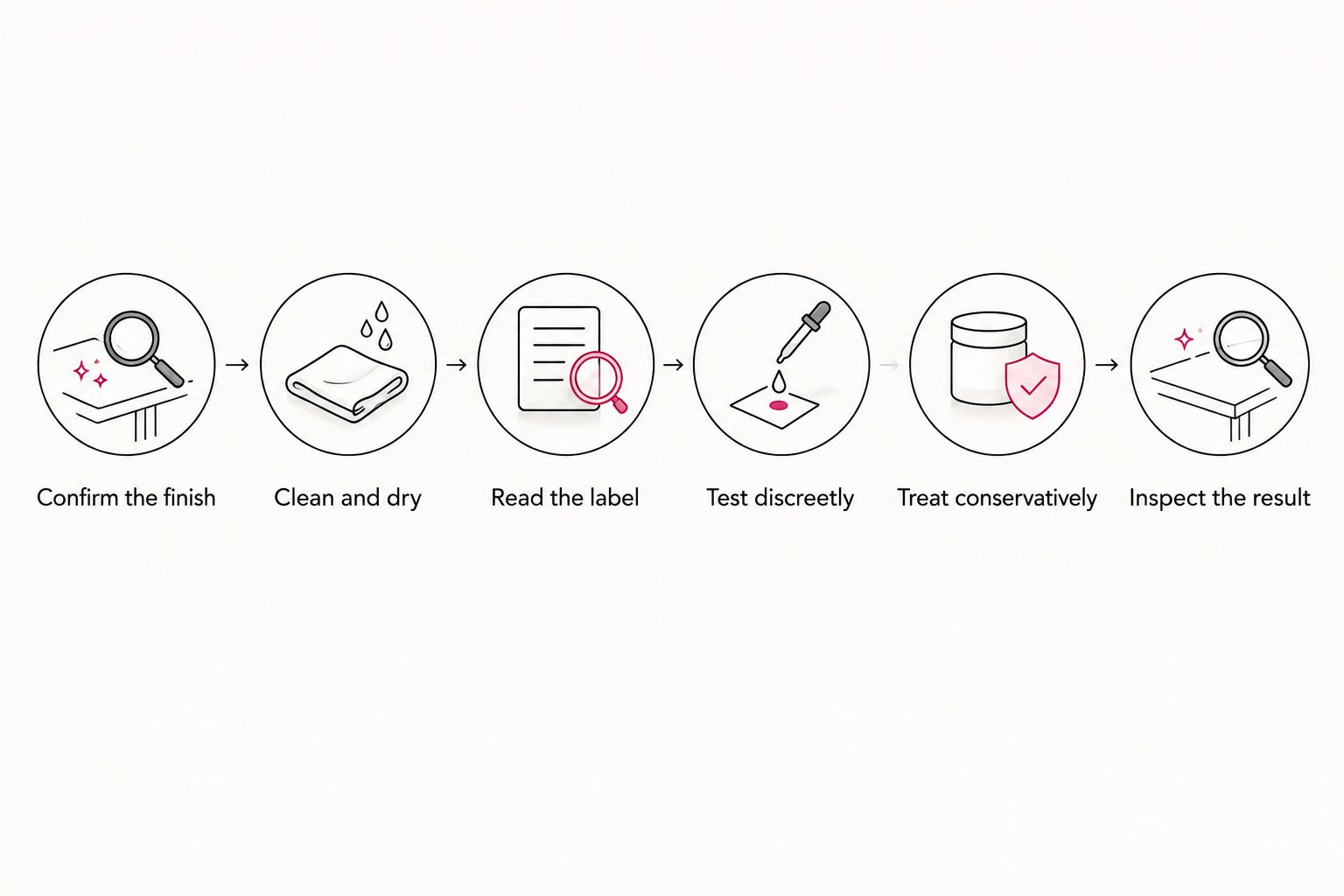
For a 2026 repair, use the current instructions on the product you actually have. Advice for a different compound or countertop finish is not interchangeable.
Honed marble: preserve the matte finish
Do not use a gloss-restoring polish on honed marble unless the product explicitly supports that finish. Honed marble has a matte appearance, so adding shine can make the repair more noticeable than the original etch.
The aim is an even texture across the affected area. A stone-restoration professional can assess whether localized honing will blend or whether a larger section needs treatment.
Honed marble does not prevent acid damage. It changes how the damage looks, and etching can still create visible changes in texture or sheen.
If you like the existing matte appearance, say so before authorizing work. Ask for a finish match rather than simply asking someone to make the mark disappear.
Rough or widespread etching: get a restoration assessment
Professional restoration is the better choice when the surface feels rough, multiple marks overlap, or a previous DIY attempt has created an uneven patch. It is also the safer route around edges, seams, and cutouts where uncontrolled abrasion adds risk.
A restorer evaluates the stone and uses a controlled refinishing process to restore a consistent surface. The advantage is better control over texture and blending; the limitation is that an invisible spot repair is not guaranteed.
Before booking work in 2026, describe the spill, any products already used, and the original finish. Include photographs of the dry countertop under ordinary room light and light coming across the surface.
Ask these questions before agreeing to the scope:
- Will the work address only the mark or a larger section?
- What finish will remain after treatment?
- How will the repaired area blend with adjacent stone?
- Are existing coatings or previous repairs affecting the result?
- What care instructions apply after refinishing?
A countertop installer and a stone-restoration specialist do not necessarily offer the same services. Confirm the actual work offered rather than assuming fabrication includes etch repair.
Why marble etch repairs vary
The same-looking ring can require a different approach on another countertop. These factors determine whether a small repair is sensible or a broader refinishing assessment is needed:
- Existing finish: Polished and honed surfaces need different final textures. Restoring shine is wrong when the surrounding marble is matte.
- Damage depth: A faint change in reflection differs from an area with visible or tactile surface loss.
- Affected area: An isolated splash is different from overlapping etches across a preparation zone.
- Stone composition: Marble varieties differ in mineral makeup and response to polishing methods.
- Previous treatments: Coatings, fillers, and past repairs can affect compatibility and blending.
- Mixed damage: An area can contain etching, staining, and scratches, each requiring its own diagnosis.
Match the treatment to the surface, not just the shape of the mark. Repeating an unsuccessful method can enlarge the area that eventually needs refinishing.
What should you never use on etched marble?
Do not use vinegar, lemon juice, acidic bathroom cleaners, or household descalers to remove an etch. Marble contains acid-sensitive minerals; those products can create additional surface damage.
Avoid abrasive kitchen powders, scouring pads, and improvised sanding. Even when they change the mark’s appearance, they can leave scratches or an inconsistent finish.
Baking soda is not a reliable way to restore polished marble’s reflection. A stain-removal treatment and an etch repair solve different problems, so do not substitute one for the other.
For routine care in 2026, choose products explicitly labeled safe for marble and follow the instructions. Keep cleaning separate from restoration: removing residue is useful, but it does not rebuild a damaged finish.
Does marble sealer remove etch marks?
Marble sealer does not remove etch marks or make marble acid-proof. An impregnating sealer helps reduce liquid absorption, while etching results from a chemical reaction at the surface.
Do not add sealer to a dull patch expecting the original shine to return. Resolve the finish damage first, then follow the stone-care professional’s or sealer manufacturer’s guidance on whether sealing is needed.
Can you leave an etch mark alone?
You can leave an etch mark alone if you accept its appearance. A superficial change in finish does not automatically mean the countertop needs replacement.
The trade-off is visual: the mark remains part of the marble’s patina. If you want a consistently reflective surface, restoration is the relevant next step.
Should you replace marble instead of repairing it?
Repair is the first option to assess for isolated etching; replacement is a broader design decision. Consider replacement when you want a different layout or material, not simply because a spill left a cloudy ring.
Soaresstone is best for New England homeowners planning custom marble countertops. The family-owned fabricator designs and installs marble, granite, quartz, and quartzite surfaces; those stated services do not establish a restoration offering.
The fit is a custom countertop project, not an assumed etch-removal appointment. If recurring marks are making you reconsider marble, discuss daily kitchen use and care expectations before selecting another surface.
Discuss your countertop plans
Tell Soaresstone about your kitchen, bathroom, or fireplace surface project.
FAQ
What’s the best way to get rid of etching on marble?
The best way to remove marble etching is to restore the affected finish. A compatible marble-specific polish can suit light damage on polished marble; honed, rough, or widespread damage needs a restoration assessment.
Can I fix a marble etch mark myself?
You can attempt a light etch repair on polished marble when a product explicitly supports your stone and finish. Test discreetly, follow the label, and stop if the treated area becomes uneven.
Will cleaning remove a cloudy ring from marble?
Cleaning removes residue, not an etched finish. Clean and dry the area first so you can distinguish surface residue from a lasting change in reflection.
Does sealing marble stop lemon juice from etching it?
Sealing does not stop lemon juice from etching marble. An impregnating sealer reduces absorption but does not prevent the acid reaction that damages the surface finish.
Is honed marble easier to repair than polished marble?
Honed marble is not automatically easier to repair than polished marble. Both need a consistent finish, and a gloss-restoring product can leave an unwanted shiny patch on honed stone.
Should I use a power buffer on an etched countertop?
Do not use a power buffer as an improvised marble repair. Incorrect tools, compounds, or technique can create a larger finish mismatch that requires professional correction.
Does Soaresstone repair etched marble countertops?
Soaresstone’s stated services cover custom countertop fabrication and installation, not a confirmed etch-restoration service. Ask about the scope before arranging work, or seek a stone-restoration specialist.
One last thing
Judge the repair only after the marble is clean and dry. Water changes the way light passes through surface irregularities, so a wet patch can look improved without the underlying finish being restored.
For your final 2026 check, look from the angle where you first noticed the etch. The goal is an even finish under normal use, not a countertop that looks repaired only while wet.
Related guides
- How to prevent etching on marble countertops
- How to remove hard-water stains from stone countertops
- How to choose a countertop fabricator