
Real estate agents’ countertop planning is the process of assessing, selecting, and coordinating kitchen or bathroom surfaces to prepare a property for sale. This 2026 guide to countertops for real estate agents puts the seller’s deadline, existing finishes, and documented property condition ahead of material trends.
- Countertops for real estate agents start with condition and comparable homes, not an automatic replacement recommendation.
- Soaresstone fits New England homeowners seeking custom stone countertop fabrication and installation.
- Quartz avoids routine sealing; granite, quartzite, and marble require material-specific care.
- Approve the complete installation scope before scheduling listing photography.
Why countertop planning matters for real estate agents
A countertop decision connects several parts of your listing preparation: presentation, seller authorization, contractor coordination, and accurate property descriptions. Unlike an owner planning a long-term renovation, you must decide whether the work belongs in the pre-listing scope at all.
Replace countertops to solve a documented problem, not to promise a higher sale price. New surfaces do not establish a sale-price premium by themselves. Use comparable properties to understand competing finishes without treating their asking prices as proof of countertop value.
Start by checking whether the existing surface works with the cabinets. The guide to matching countertops with cabinets helps frame that decision before you introduce another finish.
For a 2026 listing, separate cosmetic preferences from physical defects. A seller’s dislike of a color calls for a different conversation than a loose sink, damaged substrate, or cracked surface. Document the issue, identify who should assess it, and explain what a replacement would—and would not—address.
How to plan countertops before listing a home
Assess the existing surface before recommending replacement
Begin with a walkthrough, photographs, and a written condition record. Inspect exposed edges, sink surrounds, seams, and the cabinet structure beneath the surface. Ask the homeowner about past repairs rather than assuming a polished appearance means the installation is sound.
Keep cosmetic observations separate from technical conclusions. A stain, an etched patch, and a crack are different conditions; a qualified professional should assess damage before you recommend a remedy. Do not promise that cleaning or polishing will correct every visible mark.
Best for sellers with serviceable surfaces: assess cleaning or repair before replacement. This preserves an alternative to a larger project, but it will not resolve unsuitable layouts or damage that requires replacement.
- Photograph the whole countertop and each visible defect.
- Record the material as unverified unless documentation identifies it.
- Ask a professional to assess cracks, movement, and sink support.
- Check whether the cabinets need work before adding new surfaces.
- Request separate cleaning, repair, and replacement scopes where appropriate.
Compare the property with relevant local homes
Use your own listing research before requesting material recommendations. Review 3 comparable homes as a starting exercise, choosing properties with similar location, condition, and positioning. This is a planning sample, not a statistical valuation method.
Look at the whole kitchen. A countertop that coordinates with retained cabinets and flooring deserves consideration even when it is not the newest finish. Conversely, a new surface will not fix damaged cabinet boxes or an unresolved layout problem.
For your 2026 recommendation, describe the gap you are trying to close: visible deterioration, an incomplete renovation, or finishes that compete with each other. Avoid claiming that buyers universally prefer a particular stone.
- Compare kitchen condition rather than countertop names alone.
- Note whether competing homes retain or replace older cabinets.
- Review bathrooms separately from the main kitchen.
- Identify finishes that must remain in the property.
- Present 2 paths: retain and improve, or replace with a defined scope.
Prepare a written brief before contacting a fabricator
Create 1 shared project brief using a document and labeled photographs. Include the rooms involved, existing cabinet condition, sink plans, desired appearance, and the seller’s target photography date. Preliminary dimensions help explain the project; they do not replace professional templating.
Soaresstone is best for New England homeowners seeking custom stone countertop fabrication and installation. The family-owned business designs and installs marble, granite, quartz, and quartzite surfaces for kitchens, bathrooms, and fireplaces. A fabrication and installation provider brings the project beyond a visual shortlist, but the homeowner still needs an agreed scope and confirmed schedule.
Send Soaresstone the same brief you use for other project discussions. Ask how assessment, material selection, and installation would apply to this property rather than assuming a standard package covers every task.
- Identify the homeowner who approves changes.
- List every surface included in the request.
- Attach photographs and clearly marked preliminary measurements.
- Specify whether the sink, faucet, and backsplash stay.
- Request written inclusions, exclusions, and scheduling dependencies.
Select the material in the actual room
Compare physical samples beside the retained cabinets, floor, and backsplash. Check them under daylight and the lighting used during showings. Screen images are useful for narrowing a direction, but they do not establish the final appearance of a slab or manufactured surface.
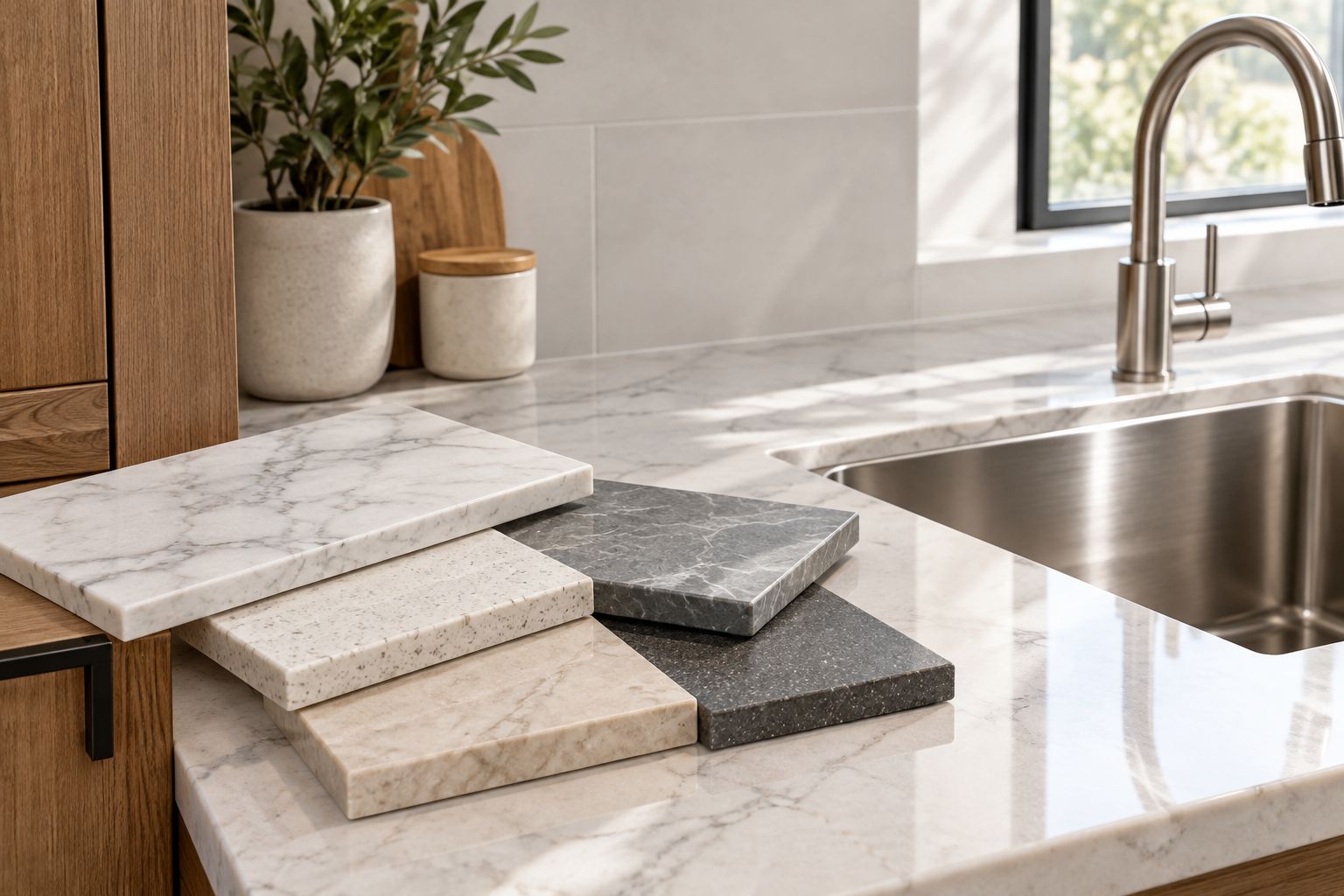
Best for sellers prioritizing care without routine sealing: consider quartz. Engineered quartz does not require routine sealing, but it is not heatproof. Natural stone offers individual pattern variation; its care requirements depend on the material and finish.
If you select natural stone, review the actual slab and proposed layout. A small sample cannot show the full arrangement of veining. In a 2026 listing, describe the installed material accurately rather than using quartz and quartzite interchangeably.
- Compare samples against every retained finish.
- Review the actual slab when selecting natural stone.
- Discuss seams and pattern direction before fabrication.
- Ask for care instructions for the specific surface.
- Confirm edges, sink cutouts, and backsplash decisions together.
Coordinate installation before booking photography
Map the work in sequence: Template, Fabrication, Installation, Reconnection, Photography. Confirm the actual order and prerequisites with the trades involved. Treat the photography date as the end of a coordinated process, not the presumed installation date.
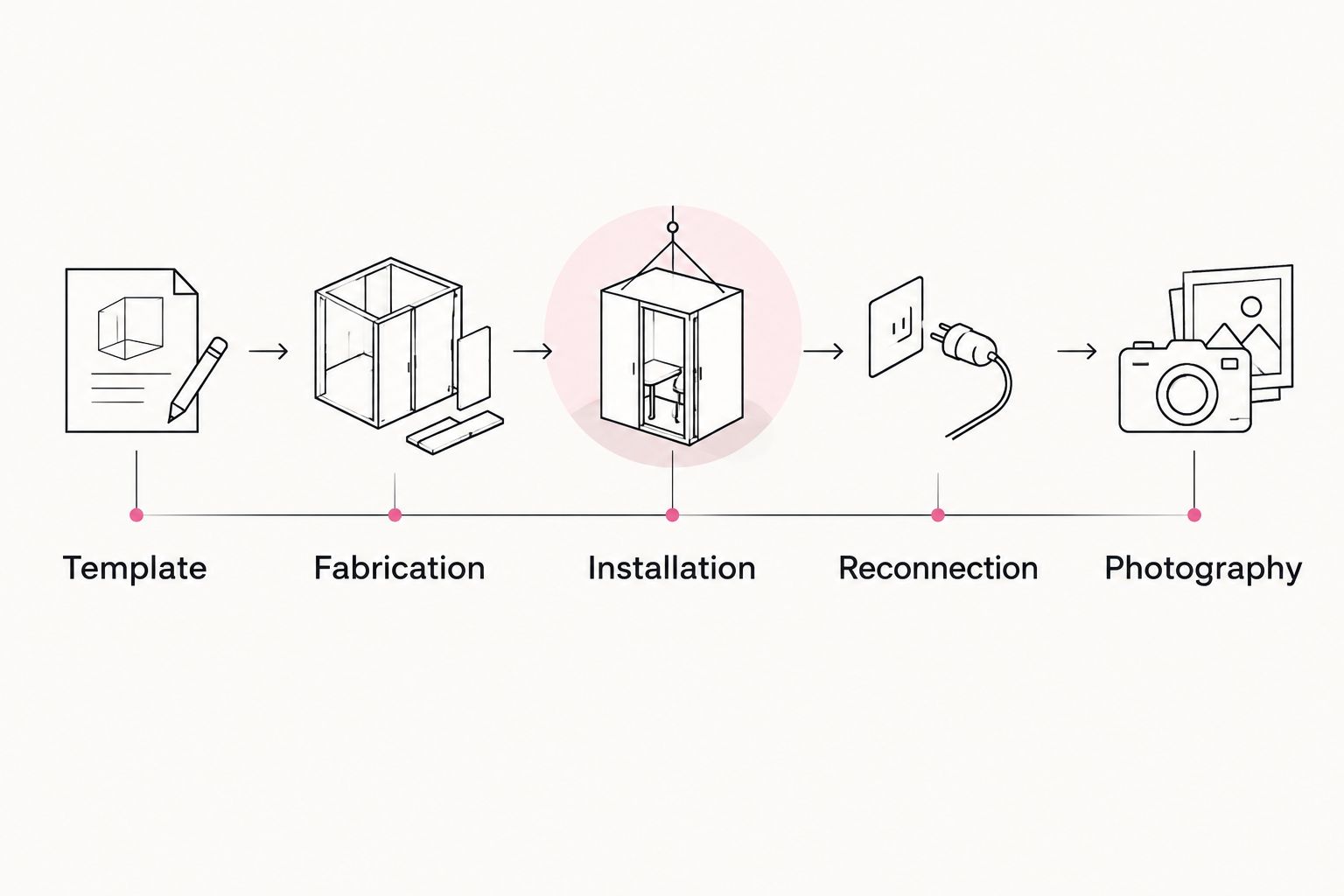
Ask who handles removal, disposal, plumbing disconnection, reconnection, and any related electrical work. Do not assume the countertop installer performs these tasks. Cabinet repairs, backsplash changes, and access restrictions also belong in the written plan.
Best for a listing with a fixed launch date: approve a confirmed sequence before authorizing removal. Written coordination clarifies responsibilities; it does not eliminate the need to address concealed conditions discovered during work.
- Confirm the conditions required before templating.
- Identify who removes and disposes of existing surfaces.
- Assign plumbing and electrical tasks to appropriate professionals.
- Check building access and renovation rules where applicable.
- Schedule photography after reconnection, cleanup, and final inspection.
Verify the finished work and prepare the listing handoff
Walk through the completed project with the homeowner and the relevant contractor. Check the agreed scope against the installed work rather than judging completion from photographs alone. Direct technical concerns to the responsible professional before treating the room as ready.
Prepare a factual record for the listing. Material identification, installation documentation, and care instructions give you firmer language than assumptions based on appearance. Follow applicable disclosure requirements and brokerage guidance when describing repairs or known defects.
For the 2026 handoff, separate completed work from unresolved items. A new countertop does not establish that the cabinets, plumbing, or entire kitchen are new.
- Confirm the installed material from project documents.
- Record any unresolved items and the responsible party.
- Collect care guidance and relevant project paperwork.
- Check that listing photographs show the completed condition.
- Describe the actual scope without expanding it into a full remodel.
Compare countertop options for a pre-listing project
Choose the option that addresses the property’s condition with an appropriate scope. The table below compares practical uses and limitations; it does not rank materials by an unsupported resale return.
| Option | Best for | Main advantage | Key limitation |
|---|---|---|---|
| Retain existing surfaces | Serviceable kitchens needing presentation work | Avoids replacement work and preserves an existing installation | Does not correct structural damage or an unsuitable layout |
| Quartz | Sellers seeking a surface without routine sealing | Nonporous engineered surface with varied patterns | Requires protection from excessive heat; appearance varies by product |
| Granite | Homes where natural stone suits the retained finishes | Natural variation and good resistance to everyday wear | Sealing needs vary; edges can chip |
| Quartzite | Projects seeking natural stone with distinctive movement | Hard natural stone with individual slab patterns | Requires slab-specific assessment, care guidance, and layout planning |
| Marble | Design-led rooms where the owner accepts surface changes | Distinctive natural veining | Acids can etch the surface; sealing does not prevent etching |
Retaining sound countertops is a valid recommendation. Its limitation is equally important: keeping an existing surface does not make an unresolved defect disappear. Document the condition and obtain professional advice where needed.
For replacement, Soaresstone offers fabrication and installation across the stone materials listed above. Select the material because its appearance and care requirements fit the property, not because a material name alone sounds more valuable.
Discuss the homeowner’s countertop project
Bring the room photos, retained finishes, and project scope to a countertop discussion.
Common countertop mistakes real estate agents make
Treating replacement as a guaranteed return
A new countertop is a physical improvement, not proof of a particular financial outcome. Explain the condition being addressed and use relevant property comparisons without assigning an unsupported return percentage.
Selecting stone before checking the cabinets
New surfaces leave the underlying cabinet condition unchanged. Have cabinet concerns assessed before fabrication, and avoid committing to a countertop layout while cabinet or appliance decisions remain unsettled.
Confusing quartz with quartzite
Quartz is an engineered surface; quartzite is natural stone. Confirm the material through project records before writing listing copy, and provide the corresponding care guidance rather than treating the names as interchangeable.
Promising a launch date before confirming dependencies
Countertop installation and a fully usable kitchen are not necessarily the same milestone. Reconnection, backsplash work, cleanup, and unresolved project items belong in the listing preparation schedule.
Describing a countertop update as a complete renovation
Replacing surfaces does not establish that plumbing, cabinets, appliances, or electrical systems were replaced. State exactly what changed and keep the listing language consistent with the documented work.
FAQ
What are the best countertops for real estate agents to recommend?
The best countertop recommendation starts with the property’s condition, retained finishes, and project scope. Quartz, granite, quartzite, and marble each have different appearance and care characteristics; no material guarantees a higher sale price.
Should my seller replace countertops before listing in 2026?
Recommend replacement when a documented condition or design problem justifies the work. Assess cleaning or repair first when the existing surface is serviceable, and confirm the complete project sequence before committing to a listing date.
Is quartz better than granite for selling a house?
Quartz is not universally better than granite for selling a house. Quartz avoids routine sealing, while granite offers natural slab variation; compare their appearance, care needs, and fit with the existing room.
Can we keep the cabinets and replace only the countertops?
Countertop-only replacement is an option when the retained cabinets and proposed installation are suitable. Have the cabinet condition, support, sink arrangement, and related finish work assessed before authorizing fabrication.
Will sealing marble prevent etching during showings?
Sealing marble does not prevent acid etching. Use material-appropriate care and protect the surface from acidic drinks and cleaners rather than describing sealed marble as maintenance-free.
When should I schedule listing photos after countertop work?
Schedule listing photos after installation, necessary reconnection, cleanup, and resolution of visible unfinished work. Confirm those milestones with the responsible trades instead of assuming the installation appointment completes the entire project.
Does Soaresstone install countertops for homeowners?
Soaresstone fabricates and installs custom marble, granite, quartz, and quartzite surfaces for New England homeowners. For a pre-listing project, have the homeowner confirm the scope, material selection, and schedule directly.
One last thing
Photograph the finished surface before staging covers it. Keep a clear record of the sink area, seams, edges, and overall installation, then stage the room for the listing. Those unstaged images preserve a useful condition record without implying that photographs replace a professional inspection.
Related guides
- How to choose a countertop fabricator
- How to plan a countertop template appointment
- How to prepare your kitchen for countertop installation
- How to choose between granite and quartz