
Granite and quartz are the two most durable countertop materials for rental properties in 2026, standing up to tenant turnover, moving day dings, and daily use far better than laminate or butcher block. The hidden cost landlords skip past: granite still needs resealing every year or two, and a fabricator who cuts the edges too thin turns a naturally tough stone into a chip magnet on move-out day.
- Quartz wins for high-turnover rentals and short-term stays because it’s non-porous and never needs sealing.
- Granite costs less over a 10-year hold if you reseal on schedule and adds more resale value when you sell.
- Skip laminate and butcher block for any unit with more than one tenant turnover a year — both fail at the seams first.
- Quartzite outlasts granite in raw hardness but still needs the same yearly sealing routine.
- A cheap installer cutting thin edges undoes the durability of whichever stone you pick.
Why this matters
Every lease turnover is a stress test your countertop either passes or fails. Tenants don't treat a rental kitchen the way an owner treats their own — hot pans land straight on the surface, cleaning products get mismatched, and move-out day is rougher on edges and corners than five years of normal cooking.
A countertop that needs replacing after two tenancies erases any savings you made choosing the cheaper material up front. For a rental kitchen or Airbnb setup, durability isn't a nice-to-have — it's the number that decides whether you're refinishing a kitchen in 2026 or in 2036.
How do you choose countertops for a rental property?
Start by matching the material to how often the unit turns over and who's liable for damage. The table below ranks the common options on the two things that matter most in a rental: how well they resist daily wear and how much upkeep they demand between tenants.
| Material | Durability | Maintenance | Best for |
|---|---|---|---|
| Quartz | High — non-porous, resists stains without sealing | Wipe clean, no sealing ever | High-turnover units, Airbnb kitchens |
| Granite | High — resists scratches and heat, can chip on thin edges | Reseal every 1-2 years | Long-term leases, resale-focused owners |
| Quartzite | Very high — harder than granite | Reseal about once a year | Landlords who want the granite look with more toughness |
| Laminate | Low — scratches, burns, seams lift over time | Replace damaged panels | Only if upfront cost is the sole priority |
| Butcher block | Low to moderate — stains and water damage | Sand and reseal regularly | Not recommended for tenant turnover |
Verdict: quartz is the safest default for any rental with tenant turnover under two years. Buy it. Granite is the better call if you're holding the property long-term and care about resale. Skip laminate and butcher block for anything beyond a starter rehab.
Granite countertops: the resale-value pick
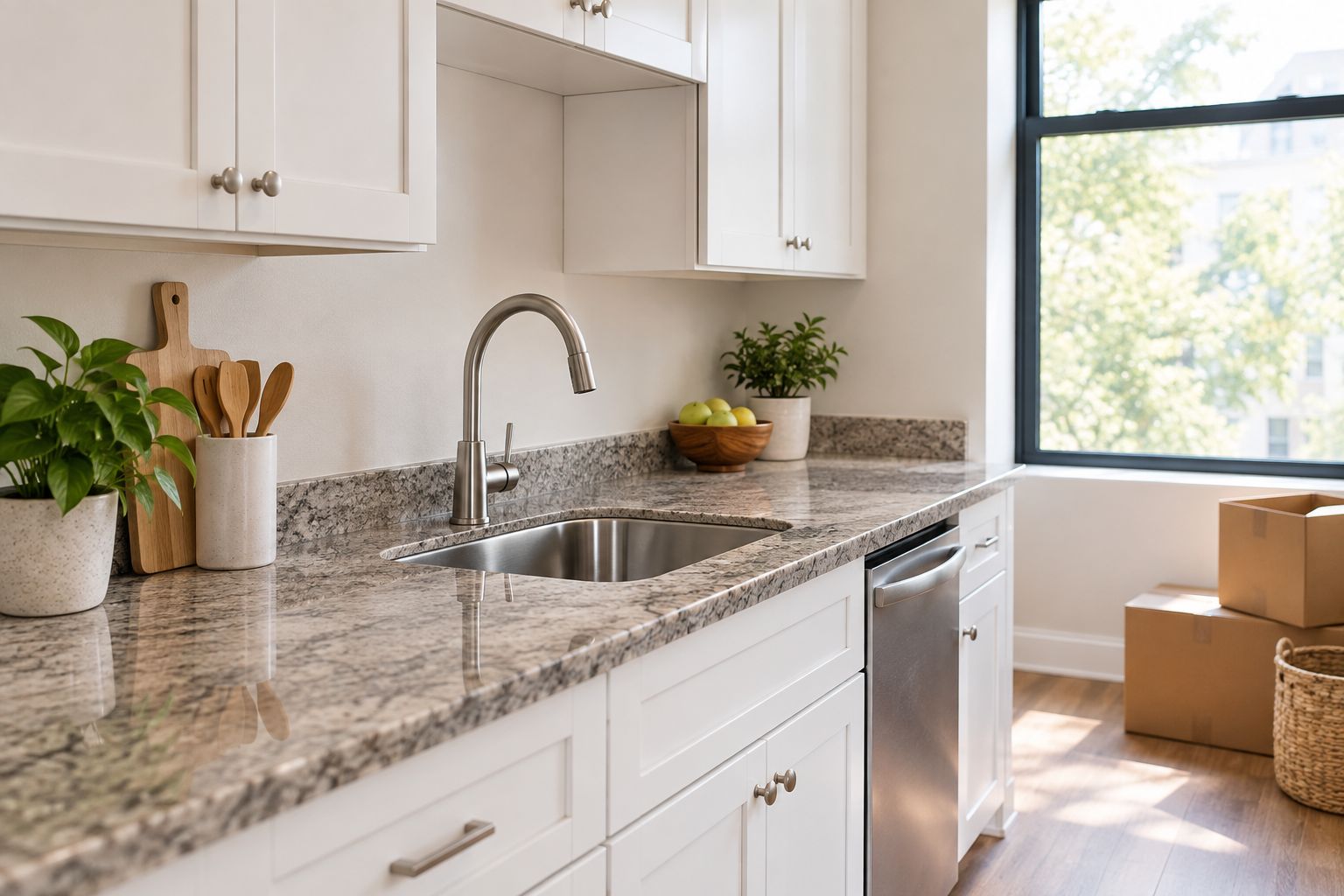
Granite holds its value when you eventually sell the property, and buyers still recognize it on sight in a way engineered materials don't always get credit for. It resists heat and everyday scratching well, but it's a natural stone, so it needs sealing on a schedule — skip that and it stains faster than quartz ever would. Verdict: Buy for long-hold rentals where resale matters more than zero-maintenance living.
Quartz countertops: the lowest-maintenance pick
Quartz is engineered, so every slab performs the same way — no sealing, no porosity, no surprise etching from a tenant's lemon juice or wine. The tradeoff is heat sensitivity: a hot pan set straight down without a trivet can scorch the resin binder in a way it can't on granite. Verdict: Buy for high-turnover units, short-term rentals, and any Airbnb kitchen where you can't rely on tenants to follow care instructions.
Quartzite: the toughest natural stone option
Quartzite is harder than granite and holds up to scratching better than almost anything else on this list, but it still needs the same yearly sealing routine as granite. It's a reasonable upgrade when you want the durability ceiling of natural stone without settling for granite. Verdict: Buy if budget allows and you want the hardest natural option available.
Why laminate and butcher block cost more long-term
Laminate looks fine on day one and fails at the seams first — moisture gets underneath, the edge lifts, and the whole panel needs replacing rather than repairing. Butcher block stains under tenant use and needs sanding and resealing far more often than any stone option. Verdict: Skip both for anything beyond a one-year flip-and-sell hold.
Why durability needs vary rental to rental
Not every unit needs the same material, and the right call depends on a handful of factors specific to how the property gets used:
- Tenant turnover rate — a unit that turns over annually takes more wear than one with a five-year tenant
- Lease length — short-term and high-traffic kitchen use pushes you toward quartz
- Who pays for damage — if you're absorbing repair costs, low-maintenance materials save more over time
- Property class — a luxury rental supports granite or quartzite; a starter unit may not justify the upgrade
- Exit strategy — properties bought for a quick resale, including house flips, often favor granite for buyer appeal
- Climate exposure — New England winters mean dry heat indoors for months, which stresses sealed stone more than a mild climate would
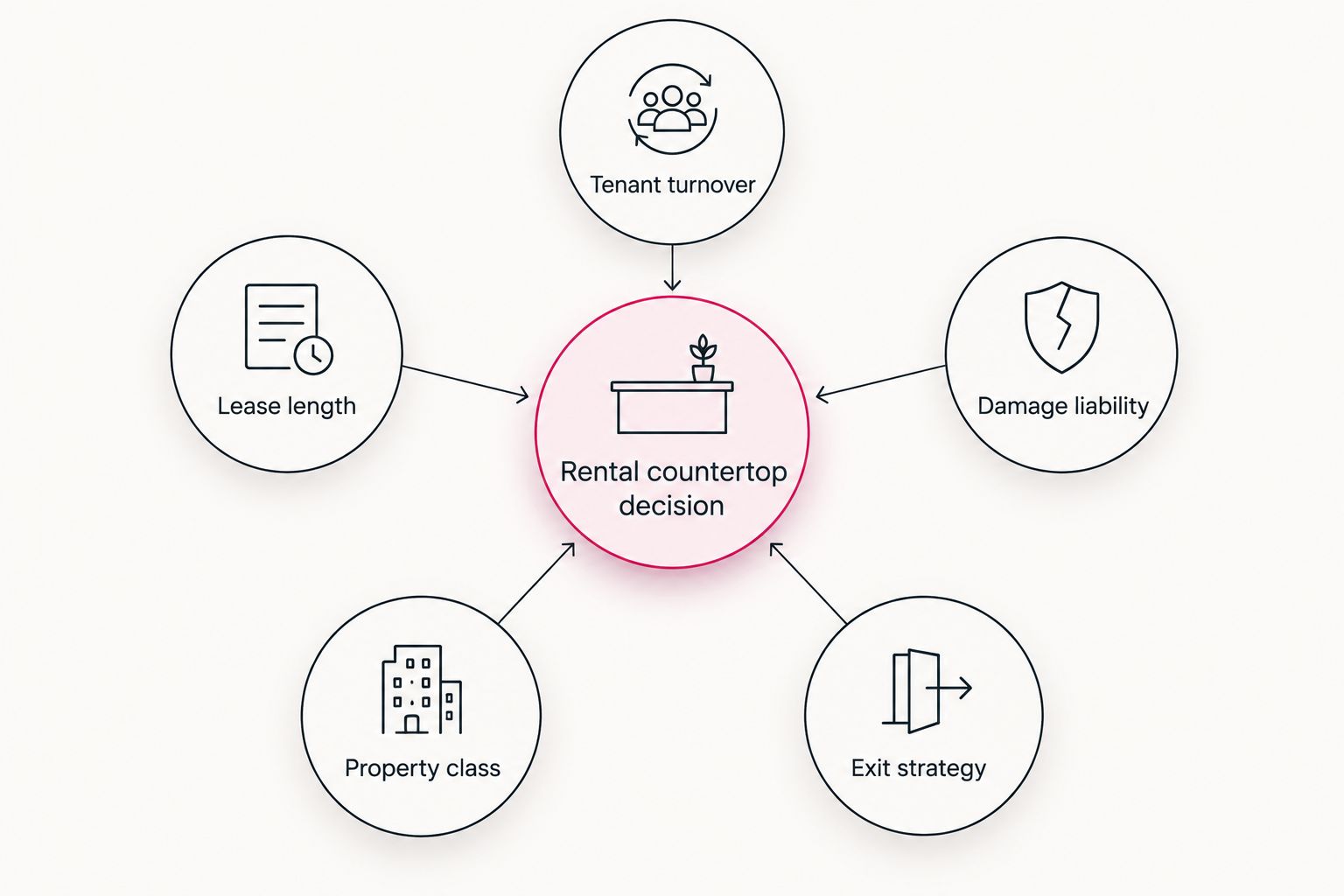
A property with two-year leases and a five-year exit plan leans quartz for the maintenance savings. A property you're holding for fifteen years and eventually selling leans granite for the resale bump. There's no universal answer — there's a match between the material and how the property actually gets used.
“If tenants will use the kitchen daily for more than two years, don’t install anything you wouldn’t put in your own home.”
Is granite or quartz better for a rental property?
Quartz is better for units with frequent turnover because it needs no sealing and resists stains outright, while granite is better for long-hold properties where resale value and heat resistance matter more than zero-maintenance living. Both outperform laminate and butcher block on tenant wear in 2026, so the real choice is between the two stones, not whether to use stone at all.
Does a durable countertop actually raise a rental's rent or resale price?
A durable, updated countertop doesn't guarantee a higher price on its own, but it removes a common objection during showings and reduces the chance of a costly mid-lease repair. Landlords planning to sell rather than hold long-term should weigh material choice against buyer expectations, not just tenant wear.
Get a rental countertop estimate
Talk through material options for your property before your next turnover.
FAQ
What’s the most durable countertop for a rental property?
Quartz is the most durable countertop for a rental property because it’s non-porous and never needs sealing, which removes the maintenance step most landlords and tenants skip. Granite is a close second and adds more resale value if you plan to sell.
Is laminate ever okay for a rental?
Laminate works for a short-hold flip where you’re selling within a year or two, but it scratches, burns, and lifts at the seams faster than stone under regular tenant use. For any multi-year hold, it costs more in repairs than the upfront savings justify.
How often do rental countertops need to be resealed?
Granite and quartzite need resealing roughly once every one to two years in a rental setting, more often if tenants aren’t wiping up spills promptly. Quartz never needs sealing, which is why it’s the lower-maintenance pick for landlords managing multiple units.
Should I choose the same countertop for every unit I own?
Standardizing on one material, usually quartz, simplifies repairs and replacement across multiple units because you’re always matching the same slab type. It also speeds up turnover work since your fabricator already knows the specs.
Does granite chip easily in a rental kitchen?
Granite resists everyday scratching well but can chip at thin, unsupported edges, which is more about fabrication quality than the stone itself. A properly templated and installed edge holds up through years of tenant turnover.
Is quartz better than granite for an Airbnb kitchen?
Quartz is better for an Airbnb kitchen because guests don’t follow sealing schedules and the surface sees heavier daily use than a standard lease. Its non-porous surface resists stains from wine, oil, and citrus without any upkeep between stays.
What countertop material holds up best against tenant damage?
Quartz and granite both outperform laminate and butcher block against tenant damage because they resist scratching, staining, and heat far better. Between the two, quartz has an edge against staining since it never needs sealing to stay stain-resistant.
One last thing
Most rental countertop failures landlords deal with in 2026 aren't from the stone chipping — they're from laminate seams lifting after repeated water exposure near the sink. Stone, sealed or not, simply doesn't have that failure point, which is why a granite or quartz install often outlasts two or three tenant cycles without a service call.
Related guides