
Best overall: engineered quartz. Best natural stone for frequent entertaining: granite. Best for dramatic natural veining: quartzite. Best for an occasional-use display counter: marble. The best countertop material for wine cellar serving areas is quartz when easy spill cleanup matters more than natural-stone character; this 2026 guide explains when to choose something else.
- Engineered quartz is the best countertop material for wine cellar serving areas when easy cleanup comes first.
- Granite suits frequently used tasting counters when you accept slab-specific sealing needs.
- Quartzite delivers natural veining, but confirm the stone’s identity and care requirements before selecting a slab.
- Marble suits occasional-use display counters; wine can etch the surface even after sealing.
Why this matters
A wine-cellar countertop is a serving surface, not just a shelf beside the bottles. Wine drips, damp glass bases, cheese boards, and sink splashes make stain resistance and cleaning requirements more useful selection criteria than appearance alone.
Soaresstone is a fit for New England homeowners seeking custom stone countertop fabrication and installation. Soaresstone designs and installs custom marble, granite, quartz, and quartzite surfaces. For your wine-cellar project, decide how the counter will be used before choosing the material, finish, or edge.
Start by separating bottle storage from tasting and serving. A counter used only to set down unopened bottles faces different demands from a wet bar where you pour red wine and prepare snacks. Neither a beautiful slab nor a sealer makes those demands disappear.
What makes the best wine-cellar countertop material?
Use these criteria to choose your 2026 countertop. The ranking favors practical indoor serving use, not a material’s prestige.
- Stain resistance: Wine pigments and food oils should be easy to remove before they penetrate the surface. Nonporous engineered quartz has an advantage here.
- Acid resistance: Wine can chemically dull acid-sensitive stone. Sealing and acid resistance are different properties; marble remains vulnerable to etching.
- Cleaning requirements: Choose a surface whose approved cleaning routine you will actually follow. Avoid treating every stone with the same household cleaner.
- Slab consistency: Engineered quartz offers controlled patterns; natural stone varies. Inspect the actual natural slab rather than relying on a small sample.
- Fabrication fit: Sink cutouts, seams, unsupported spans, and seating overhangs affect the finished counter. Material choice does not replace a support plan.
- Room compatibility: Evaluate the sample beside your racks, cabinetry, and lighting. A pattern that looks clear in a showroom can read differently inside your cellar.
For a 2026 renovation, write down your priorities before comparing samples. If your first requirement is wiping up wine without managing a sealing routine, quartz leads. If your first requirement is genuine natural stone, granite becomes the practical starting point.
Wine-cellar countertop materials at a glance
| Material | Best for | Standout feature | Key limitation |
|---|---|---|---|
| Engineered quartz | Low-maintenance indoor serving counters | Nonporous surface that does not require sealing | Resin binders require protection from high heat |
| Granite | Frequently used natural-stone tasting counters | Durable natural surface with varied patterns | Absorption and sealing needs vary by slab |
| Quartzite | Statement counters with natural veining | Hard natural stone with flowing visual movement | Stone identity and absorption need confirmation |
| Marble | Occasional-use display counters | Distinctive natural veining and a traditional appearance | Wine can etch the surface despite sealing |
The table separates four different priorities. Engineered quartz wins on routine maintenance; granite wins when you want a working natural-stone counter. Quartzite and marble belong on the shortlist only when their appearance justifies their respective care requirements.
1. Engineered quartz: best for low-maintenance wine-cellar serving
Engineered quartz combines mineral content with resin binders to create a nonporous countertop surface. It does not need the penetrating sealer used on absorbent natural stone, making it a straightforward choice for an indoor counter where you regularly pour wine.
That does not make quartz stain-proof or indestructible. Wipe up spills promptly, use approved cleaning products, and keep hot cookware or heated serving equipment off the bare surface.
Engineered quartz pros
- No sealing routine: Engineered quartz does not require periodic sealing to limit liquid absorption.
- Simple spill cleanup: Its nonporous surface helps keep wine and food residue from penetrating the countertop.
- Controlled appearance: Manufactured patterns make it easier to coordinate counters with cabinetry and adjacent surfaces.
- Flexible visual direction: You can choose a quieter pattern when bottles, racks, and glassware already create a busy backdrop.
Engineered quartz cons
- Resin binders make direct high heat a concern; use protective trivets where required.
- Abrasive pads and unsuitable chemicals can damage the finish.
- A manufactured pattern does not provide the individual character of a natural slab.
Best for: Homeowners who want an indoor tasting or serving counter without a natural-stone sealing routine.
For a 2026 wine-cellar project, quartz is the default when cleanup comes first. Confirm the selected manufacturer’s care instructions and intended-use guidance before fabrication, especially if the counter extends into a sunny adjoining room.
Verdict: Buy engineered quartz for low-maintenance indoor serving.
2. Granite: best for frequently used natural-stone tasting counters
Granite gives you a natural surface suited to regular serving and entertaining. Its mineral pattern varies from slab to slab, so your selection determines both the room’s appearance and part of its maintenance routine.
Many granites resist everyday wear well, but absorption varies. Assess the actual slab and follow the recommended sealing instructions rather than assuming every granite needs the same treatment.
Granite pros
- Natural character: Each slab has its own mineral pattern and color variation.
- Durable working surface: Granite is suited to counters used for pouring, serving, and setting down trays.
- Pattern flexibility: Quieter and more active patterns offer different ways to balance cabinetry and wine racks.
- Natural-stone practicality: Granite generally presents less concern about wine-related etching than marble, though mineral composition still matters.
Granite cons
- Some slabs need sealing to reduce liquid absorption.
- Chips remain possible around exposed edges and sink openings.
- A small sample does not show the full slab’s variation or the appearance of a planned seam.
Best for: Homeowners who want natural stone on a regularly used tasting counter and accept its care requirements.
Inspect granite under lighting similar to your cellar lighting. Look beyond the center of the slab: the edge, seam position, and area around a sink will become part of the everyday view.
Verdict: Buy granite for frequent entertaining when natural stone is the priority.
3. Quartzite: best for a statement counter with natural veining
Quartzite is a natural metamorphic stone, not another name for engineered quartz. It offers natural veining and a hard mineral structure, making it a strong candidate when the counter is a central design feature.
The name alone is not enough to complete the selection. Confirm that the slab is quartzite and discuss its absorption, surface treatment, and maintenance requirements with the fabricator.
Quartzite pros
- Natural movement: Veining can make a tasting counter the focal point of the room.
- Hard mineral structure: Genuine quartzite provides resistance to everyday scratching, without eliminating the need for cutting boards.
- Individual slab character: You choose a specific natural pattern rather than a repeated manufactured design.
- Design continuity: Careful slab layout can carry the visual movement across adjoining countertop sections.
Quartzite cons
- Some quartzite needs sealing; hardness does not mean nonporosity.
- Commercial stone names can be inconsistent, so the material’s identity needs confirmation.
- Strong veining makes seam placement and slab layout more visually consequential.
Best for: Homeowners who want a naturally veined statement counter and will review the actual slab and fabrication layout.
Ask to see where seams and cutouts will interrupt the pattern. A beautiful slab does not guarantee a beautiful finished layout when the most distinctive section disappears into a sink opening.
Verdict: Buy quartzite for natural veining after confirming the slab and care requirements.
4. Marble: best for an occasional-use wine-cellar display counter
Marble offers natural veining and a traditional appearance, but it is the least forgiving option here for wine spills. Acid can react with its carbonate minerals and leave a dull etched mark, even when the stone is sealed.
Choose marble because you accept that surface change, not because you expect a sealer to prevent it. A honed finish changes the appearance of the surface; it does not remove marble’s acid sensitivity.
Marble pros
- Distinctive appearance: Natural veining can suit a display-focused cellar or tasting nook.
- Finish choices: Honed and polished finishes provide different visual effects.
- Patina potential: Surface wear can fit a room where you welcome an aged appearance.
Marble cons
- Wine can etch marble, and sealing does not prevent that chemical reaction.
- Absorbent slabs can stain when spills remain on the surface.
- Removing an etched mark is different from cleaning a stain and can require professional refinishing.
Best for: Occasional-use display counters where appearance matters more than keeping an unchanged finish.
If guests will pour wine directly over the counter, marble asks you to accept a meaningful maintenance trade-off. Use serving trays and coasters, but do not treat those accessories as a guarantee against marks.
Verdict: Skip marble for carefree entertaining; buy it only if you accept etching and patina.
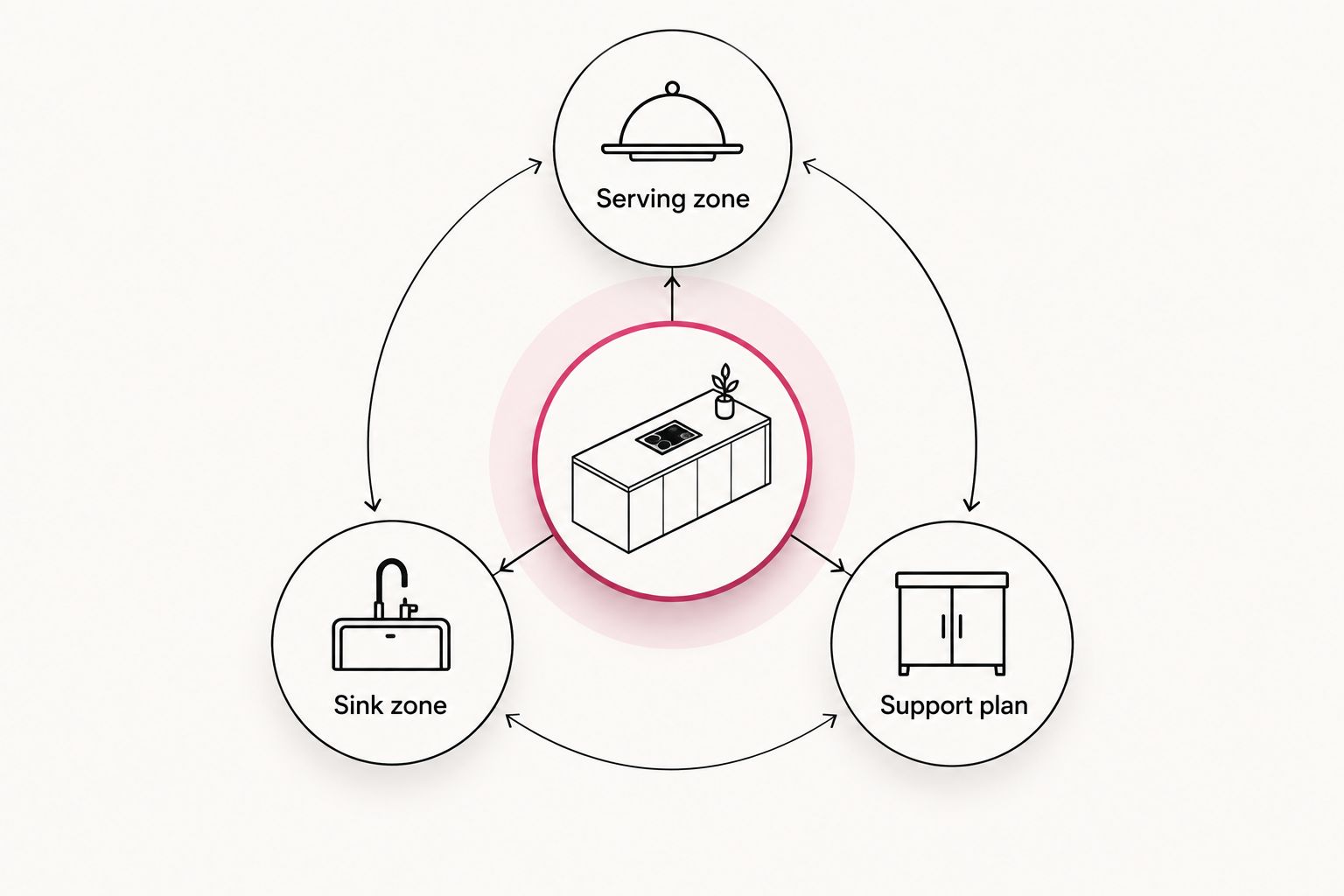
Plan the counter around how you serve
Serving zone
Reserve an uninterrupted landing area for bottles, glasses, and a serving tray. Keep the main pouring area away from an exposed countertop edge so you are not constantly working where knocks and drips are hardest to manage.
Use a cutting board for food preparation regardless of material. Countertop hardness does not protect knives, and a board keeps food acids and repeated cutting off the finished surface.
Sink zone
If your cellar includes a sink, finalize the sink and faucet selections before templating. Their dimensions and installation requirements determine the cutout, faucet holes, and usable space around the bowl.
Pay attention to cleaning access behind the faucet and around the sink rim. A detail that looks tidy in a drawing still needs room for your hand and a cloth.
Support plan
Natural-stone and engineered-quartz slabs are commonly offered in nominal 2 cm and 3 cm thicknesses. Neither thickness automatically approves a seating overhang or unsupported span; material, cutouts, cabinet support, and reinforcement determine the design.
For your 2026 installation, confirm support requirements before ordering cabinetry or committing to bar seating. Soaresstone provides custom countertop fabrication and installation; discuss the selected material, cabinet layout, and cutouts together rather than as separate decisions.
Room conditions
A commonly cited target for long-term wine storage is about 55°F, but your collection and cooling-system guidance determine the room’s operating conditions. Countertop material does not replace temperature control, humidity management, or a properly designed cellar enclosure.
Investigate condensation or damp cabinetry before installation. A nonporous countertop cannot correct moisture problems underneath it.
How we ranked these materials
This 2026 ranking prioritizes spill cleanup, acid sensitivity, routine maintenance, and suitability for an indoor serving counter. It compares established material properties rather than claiming product testing or assigning scores to individual slabs.
Quartz ranks first because it avoids natural-stone sealing requirements. Granite leads the natural-stone choices for regular serving, quartzite earns the statement-surface position, and marble belongs in an appearance-first setting where etching is acceptable.
Which countertop material should you choose?
Choose engineered quartz if you are undecided. It is the clearest match for an indoor wine-cellar counter where you want to pour, wipe up, and avoid a sealing routine.
Choose granite if natural stone is non-negotiable. Move to quartzite for a particular slab’s veining, and select marble only when you accept the consequences of acid exposure. Your final decision should include the actual slab or sample, finish, seam layout, and care instructions—not just the material name.
Plan your custom countertop
Discuss material selection, fabrication, and installation with Soaresstone.
FAQ
What’s the best countertop material for a wine cellar?
Engineered quartz is the best default for an indoor wine-cellar serving counter when easy cleanup and no sealing routine are your priorities. Granite is the practical alternative when you prefer natural stone.
Is granite better than quartz for a wine-cellar counter?
Granite is better when natural slab character matters more than avoiding sealing requirements. Engineered quartz is better when you want a nonporous indoor serving surface with a simpler maintenance routine.
Will red wine stain a quartz countertop?
Red wine can leave marks on engineered quartz, so wipe spills up promptly. Its nonporous construction helps resist penetration, but it does not make the surface stain-proof; follow the selected manufacturer’s cleaning instructions.
Can I use marble in a wine cellar?
Yes, marble suits a wine-cellar counter if you accept etching and possible staining. Wine can dull marble through an acid reaction, and a penetrating sealer does not prevent that reaction.
Are quartz and quartzite the same material?
No, engineered quartz is a manufactured countertop material with resin binders, while quartzite is natural stone. Their sealing needs, heat precautions, and slab-selection process differ.
Does wine-cellar humidity mean I need a special countertop?
Humidity alone does not determine the countertop choice; the entire room needs an appropriate moisture-control design. Resolve condensation and damp cabinetry before installation rather than expecting the countertop to solve them.
Should I choose polished or honed stone for my wine-cellar counter?
Choose the finish after comparing its appearance and care requirements on the selected stone. Honing changes the sheen but does not make marble acid-resistant or remove a natural stone’s sealing needs.
What should I finalize before ordering a countertop in 2026?
Finalize the cabinet layout, sink, faucet, seating requirements, and support plan before countertop templating. Review the actual material and seam layout with the fabricator so the finished counter matches the intended serving setup.
One last thing
Etching is not a stain. A wine spill can leave marble dull without leaving a colored mark, so stain remover is not the answer to every blemish.
Before choosing marble, decide whether you would accept that dull spot beside your glasses. If the answer is no, return to quartz, granite, or verified quartzite instead of relying on a sealer to do a job it cannot do.
Related guides
- Choosing a countertop material for wet bars
- Preventing etching on marble countertops
- Planning a countertop template appointment